

The Case for a Garden Close to Home


When the door opens every morning on Elberta Street, Sybil the dog and I have a well-worn path through the yard. She beelines it to the crape myrtle in the front yard for her daily squirrel sniff, and I wander toward the patio steps with my coffee cup. Sybil eventually joins me for scratches, seeming to know this is where I’ll land for the next fifteen minutes—catching warm early morning sun rays, pulling scraggly Bermuda grass runners, and deadheading my geraniums and coneflowers.
Before the busy begins, I’ll cross the driveway to my veggie beds. I check for new baby cotyledons. I find the twine on the edge of the bed and tie up the pea vines. I make a mental note that cabbage must be on the menu again today—Brian can suffer through it. I water a few plants that need some love, smoosh two harlequin bugs canoodling on my kale, and pull a handful of sorrel for my avocado toast.
Except for a quick dinnertime sprint for that cabbage before the burgers go on the grill, early morning is likely the only time I’ll have in my garden today.
And I imagine a lot of my clients are similar.
Most of us are not wandering dreamily through the garden for hours every day with a linen apron and a harvest basket. We are checking on seedlings before work, grabbing basil while the pasta water boils, pulling a few weeds while the dog sniffs around, and harvesting dinner in the five minutes before dinner actually has to happen.
That reality has become one of my favorite garden design reminders: a garden should be placed where it can become part of your actual life.
Designing for your Real Routines
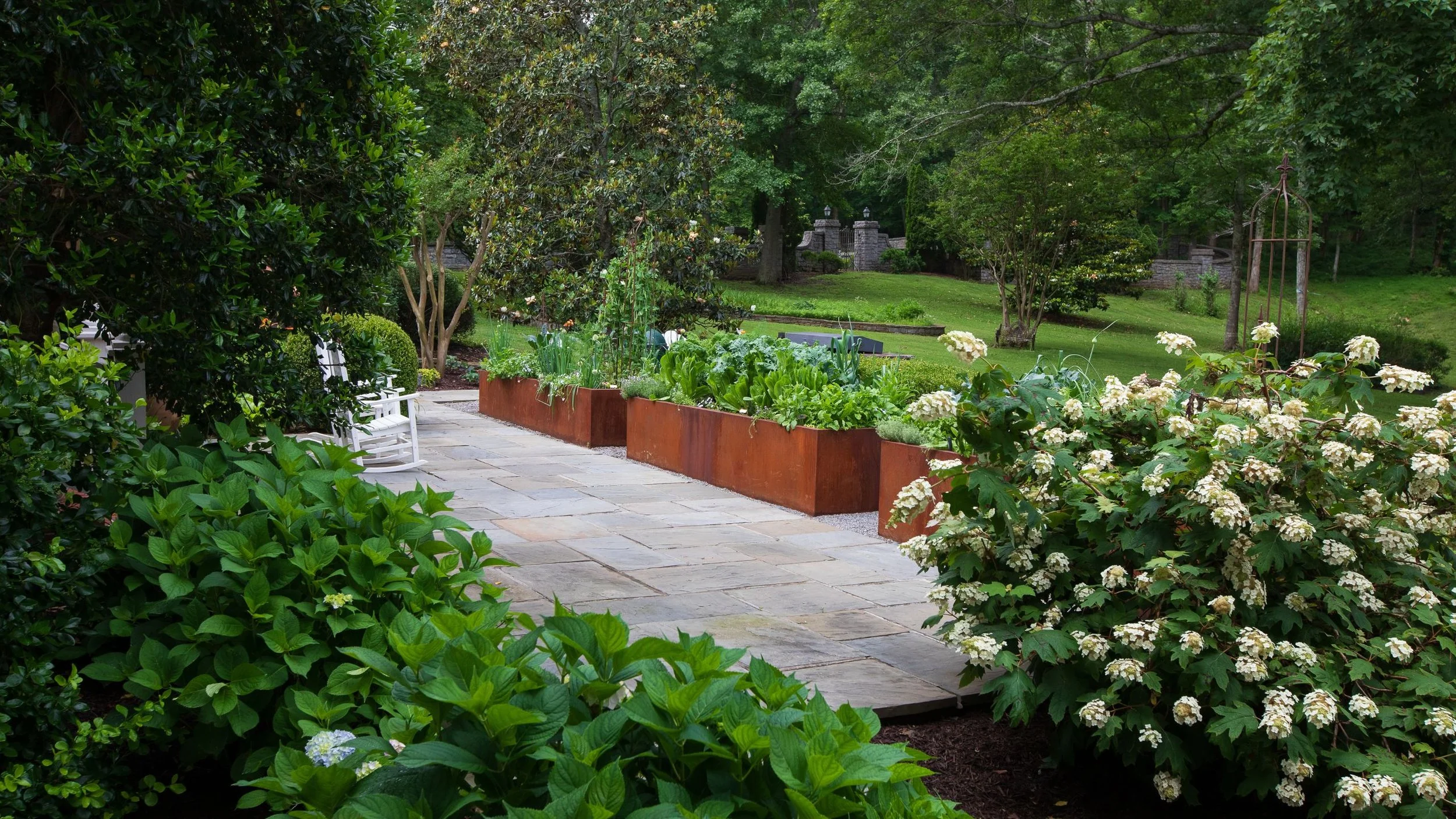
Rocking Chairs Overlooking Garden
I’ve co-dreamed a lot of garden spaces over the past six years. A client calls and describes an area of the yard where they’ve envisioned something beautiful: a sunny corner, a forgotten nook, a wide-open patch of lawn, a side yard that finally feels ready for a purpose. And we start dreaming.
But before we talk too much about the beds, arches, pathways, or plants, I want to understand one thing:
How do you already move through this space?
What door do you use when you come home from work? Where do you cook, grill, or eat outside? Where do you drink your morning coffee or your afternoon cocktail? Where do the kids run? Where does the dog wander? Where do you naturally pause?
Those questions matter because a kitchen garden is not just a place where vegetables grow. It is a place you need to notice. You need to pass it often enough to see the lettuce before it bolts, the tomatoes before they split, the basil before it flowers, and the cucumber before it turns into a baseball bat.
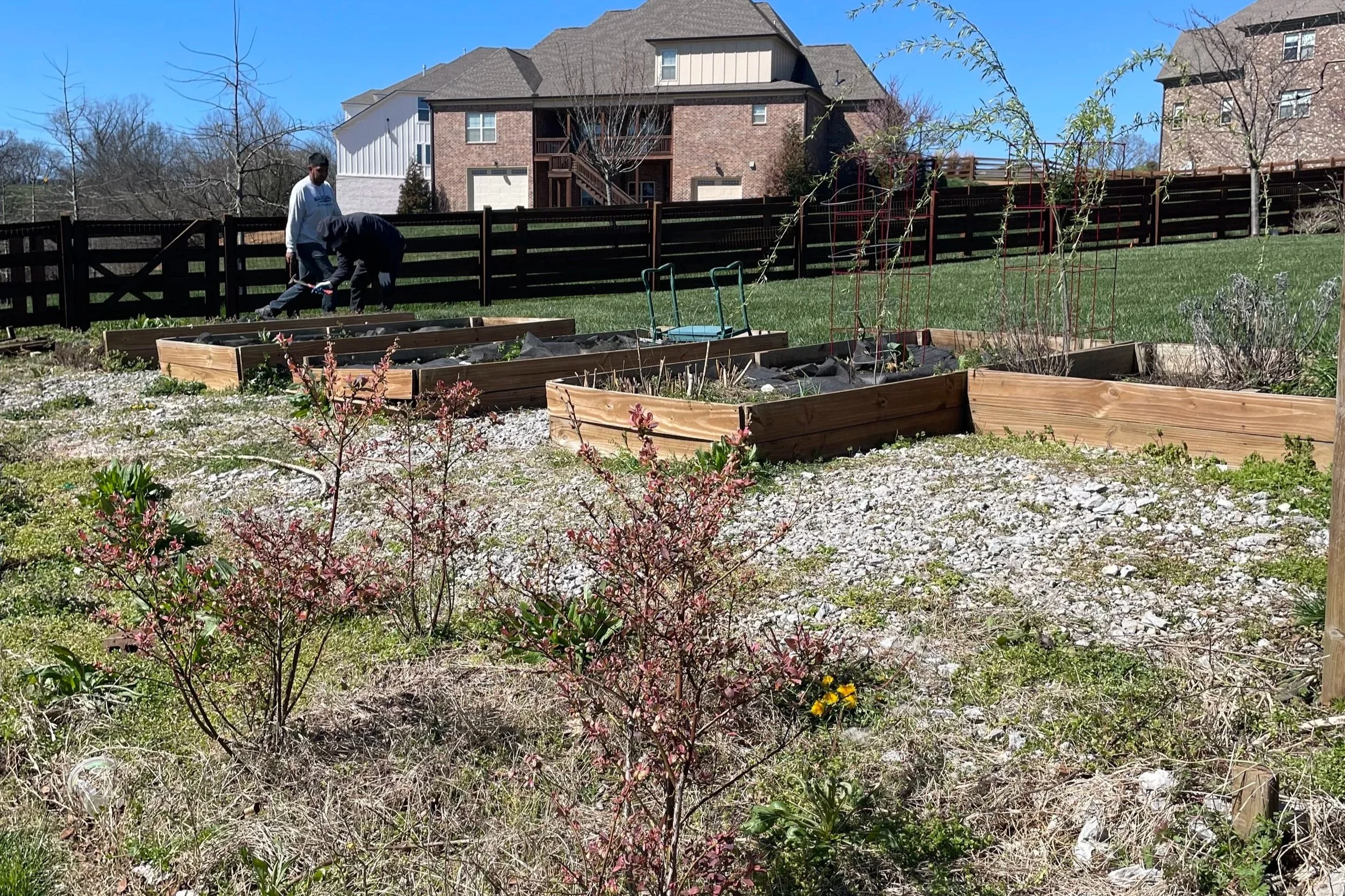
A garden that is beautifully planted but disconnected from your daily life can become one more chore waiting for your attention. A garden placed along your normal path becomes an invitation to pick some flowers while chatting on the phone.
Of course, sunshine matters. Vegetables need light, and I will never argue with a good sunny spot. But I have also seen clients place gardens several hundred feet from the house in search of the flattest, sunniest patch of yard, only to discover that distance has its own cost.
When the garden is far away, you have to decide to “go garden.” You need the right shoes. You need a minute. You need to remember the scissors, the harvest basket, the twine, the watering can, the motivation. And on busy days, those little barriers are enough to keep you away. The garden suffers, not because you don’t care, but because life is full.
Design Around the Life You Already Have
The better solution is often to bring the garden closer to the rhythms that already exist. Place it where you walk by on the way in from the car. I once had clients whose garden sat right along their daily path from the car to the house. They kept leaving their keys on the edge of the raised bed, which was inconvenient, but also proof that the garden was exactly where it needed to be. They were touching it, seeing it, using it. It became as dangerous as the couch cushion at hiding household items :)
The point is not to force the garden into some imaginary perfect location. The point is to design a garden that belongs to the way you live.
Have a pool? Build border beds along the edge so herbs, flowers, and vegetables become part of the place where people already gather.
Can’t find perfect symmetry? Build a circular garden with a curved pathway. Sometimes a curve solves what a rectangle never could.
Have a deck? Wrap a raised bed around the base and let herbs, flowers, and trailing plants soften the steps or railings.
Have a side yard that feels like a pass-through? Turn it into a productive walkway with gravel, raised beds, and something beautiful to move through every day.
Have a sunny front yard but a shady backyard? Maybe the kitchen garden belongs in the front. If you design with the architecture of your home in mind, you can blend the garden in as much as any boxwood or brick!
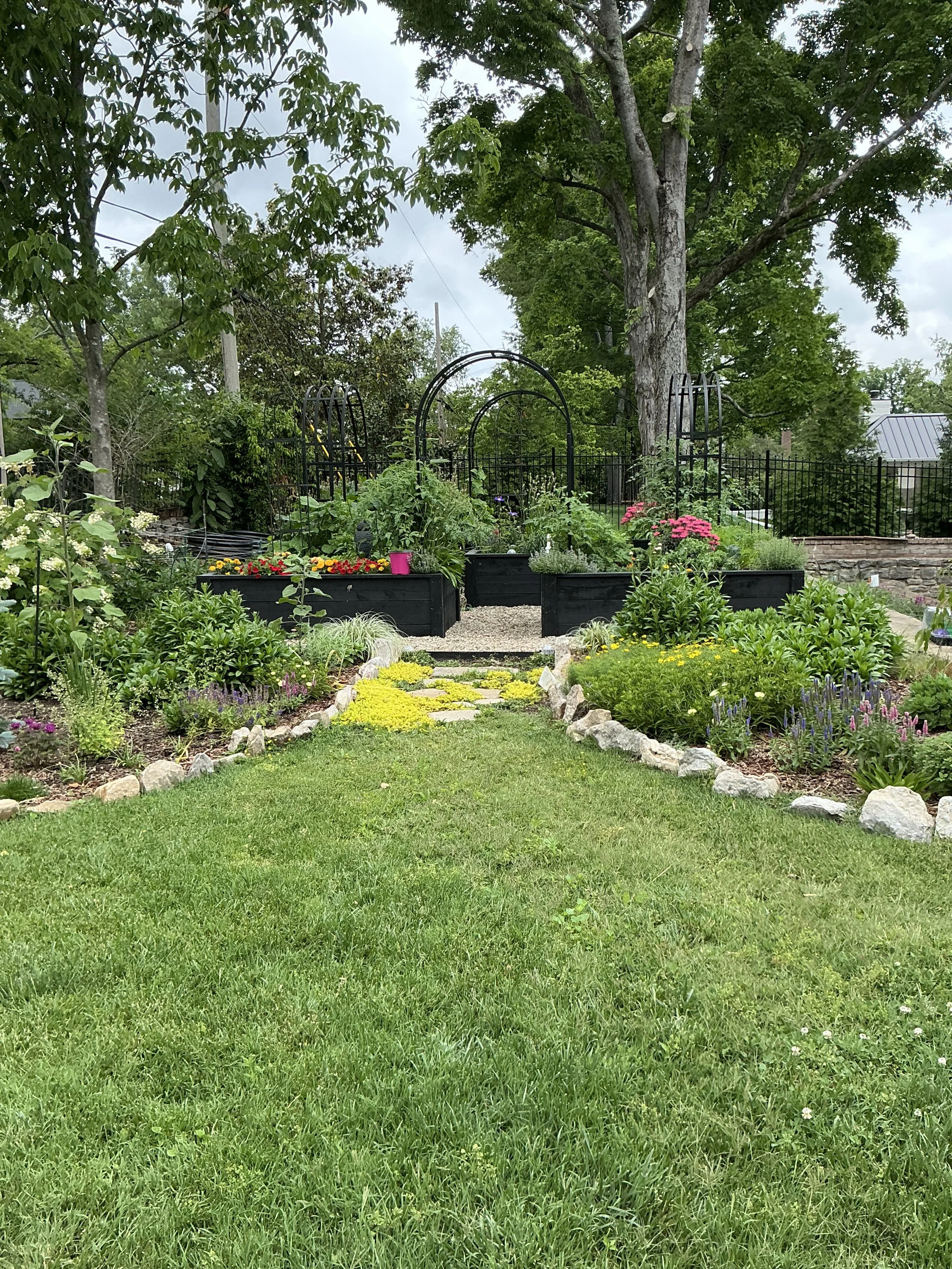
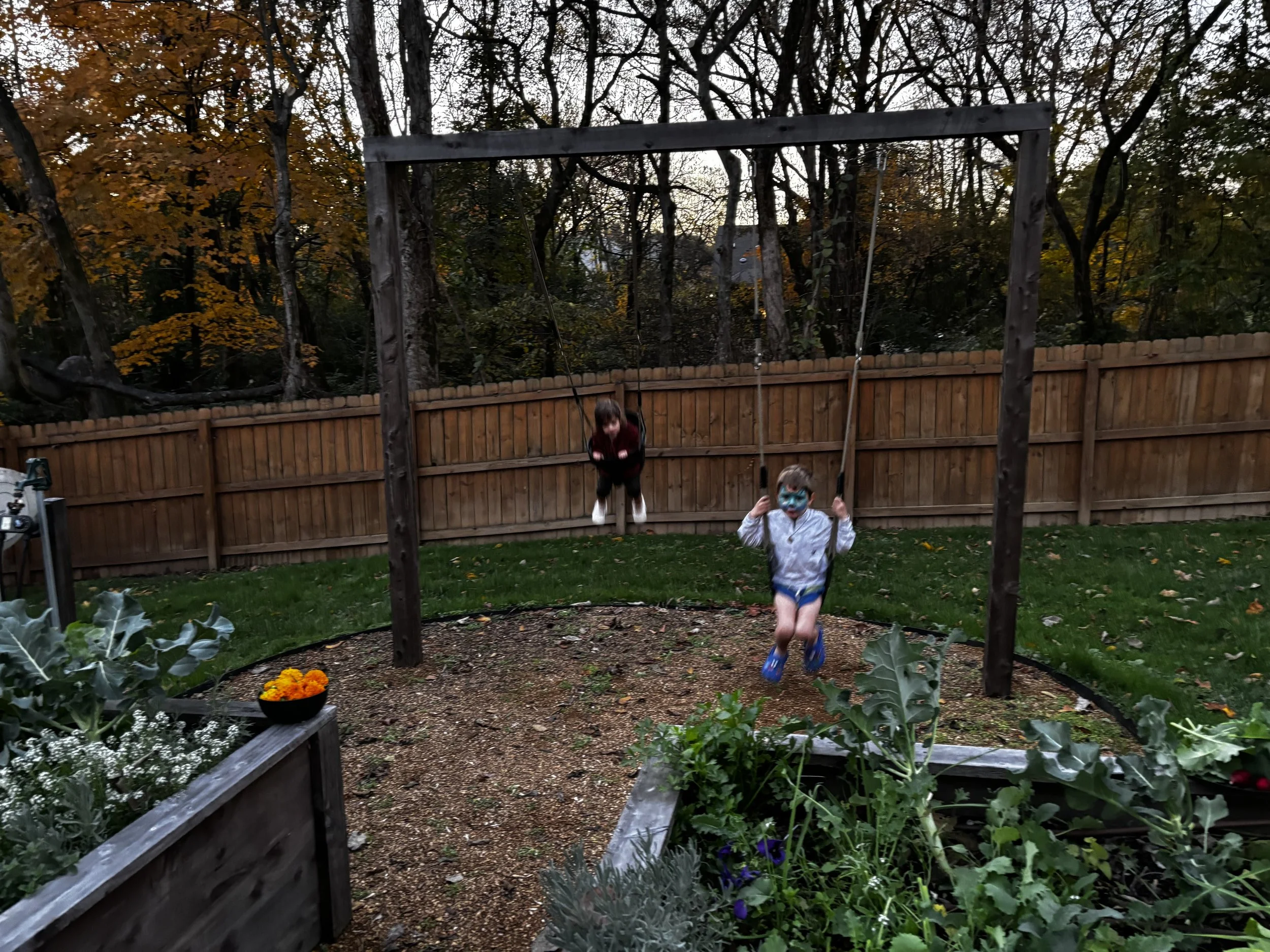
Design so that it’s easy…
This is especially true for herbs and everyday harvests. If you have to cross a wet yard in your slippers to get parsley, you may decide dinner is fine without parsley. But if the herbs are growing just outside the door, suddenly you are the kind of person who finishes soup with chives and tears basil over pasta while the noodles are still steaming.
A well-placed kitchen garden does that over and over again. It makes it easier to harvest. Easier to water. Easier to notice pests. Easier to pull one weed instead of ignoring fifty. Easier to step outside for five minutes and come back with something beautiful.
Before you choose where your garden should go, ask yourself:
Where do I already walk every day?
What door do I use most often?
Where do I cook, grill, or eat outside?
Where is the nearest water source?
Can I see the garden from a window or patio?
Will I pass it often enough to notice what it needs?
Does this location make harvesting feel easy?
If you’re ready for a kitchen garden and need a second opinion, give us a call and schedule a site visit. We’ll help you dream and tie you back to your daily habits. The best location is not always the biggest or most obvious spot. It is the place where sunlight, beauty, and daily life overlap.
