

For Your Inspiration…
Several times a year, new gardeners ask us if we can create a plant map for them so that they can plant their gardens. It’s tricky enough to select which crops to plant each year, much less how many, where, and in what combination! Early on in the business, I used to spend hours creating detailed planting diagrams, painstakingly placing tiny plant icons into squares on graph paper. But here's what I discovered: when I actually arrived at the garden, I'd often toss the diagram aside and start fresh.
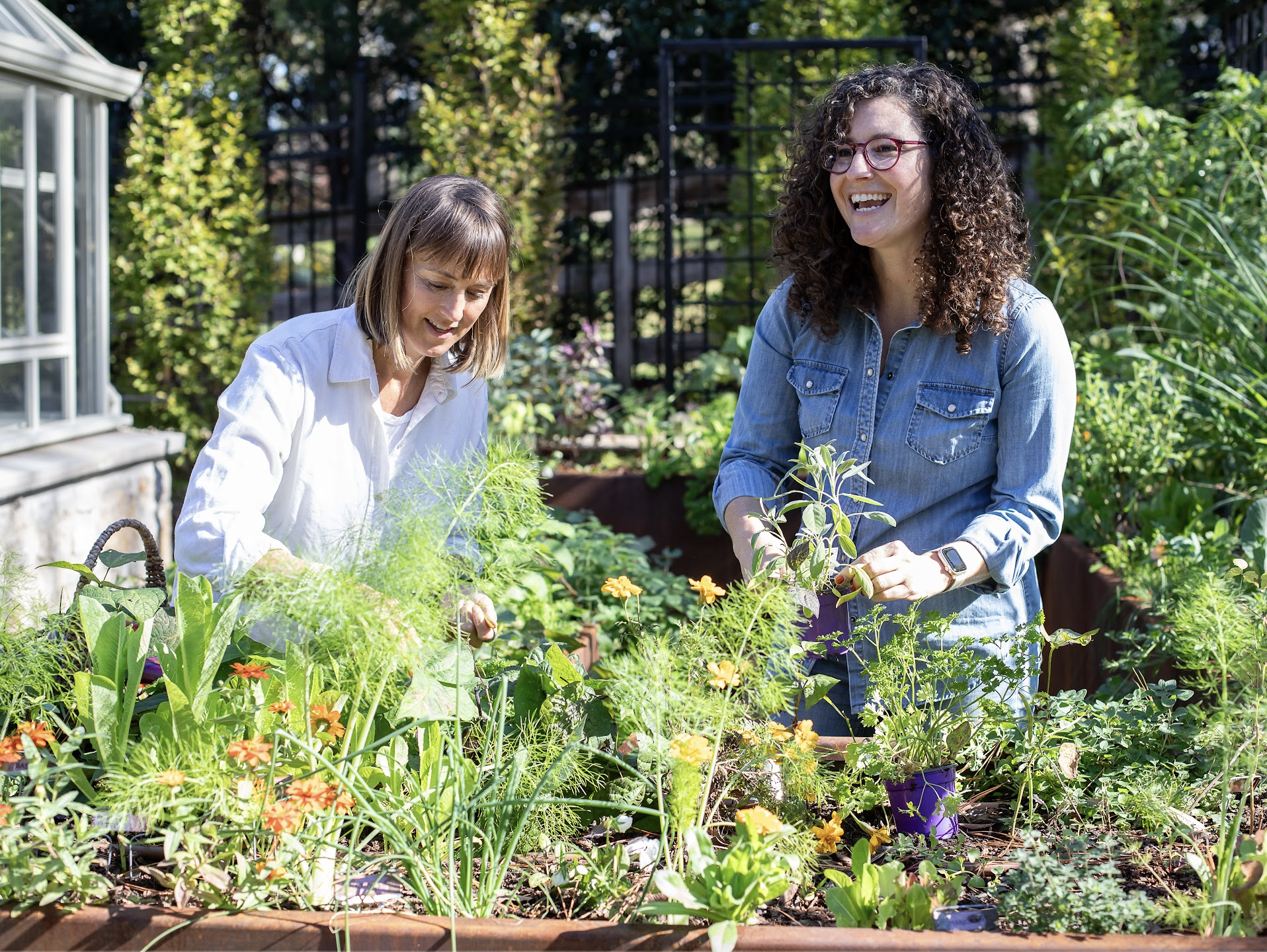
Instead, I'd make decisions based on what I saw in front of me: the direction of the sun, the orientation of the raised beds, the placement of the irrigation lines, and which plants I thought would look beautiful growing next to one another as I envisioned the growing space. Over time, I've come to realize that planting a garden is less about following a perfect map and more about learning to work with the space in front of you.
That said, I know how reassuring it can be to have a little guidance, especially when you're staring at an empty raised bed with a tray of seedlings in your hands, wondering where on earth to begin. So today, I've put together a little photo journey through some of our favorite gardens, highlighting plant combinations we love and hope you'll feel inspired to try.
Think of it as a collection of ideas rather than a set of instructions. Take what you love, adapt it to your own space, and don't be afraid to experiment.
The ol’ adage: Thrillers, Fillers and Spillers
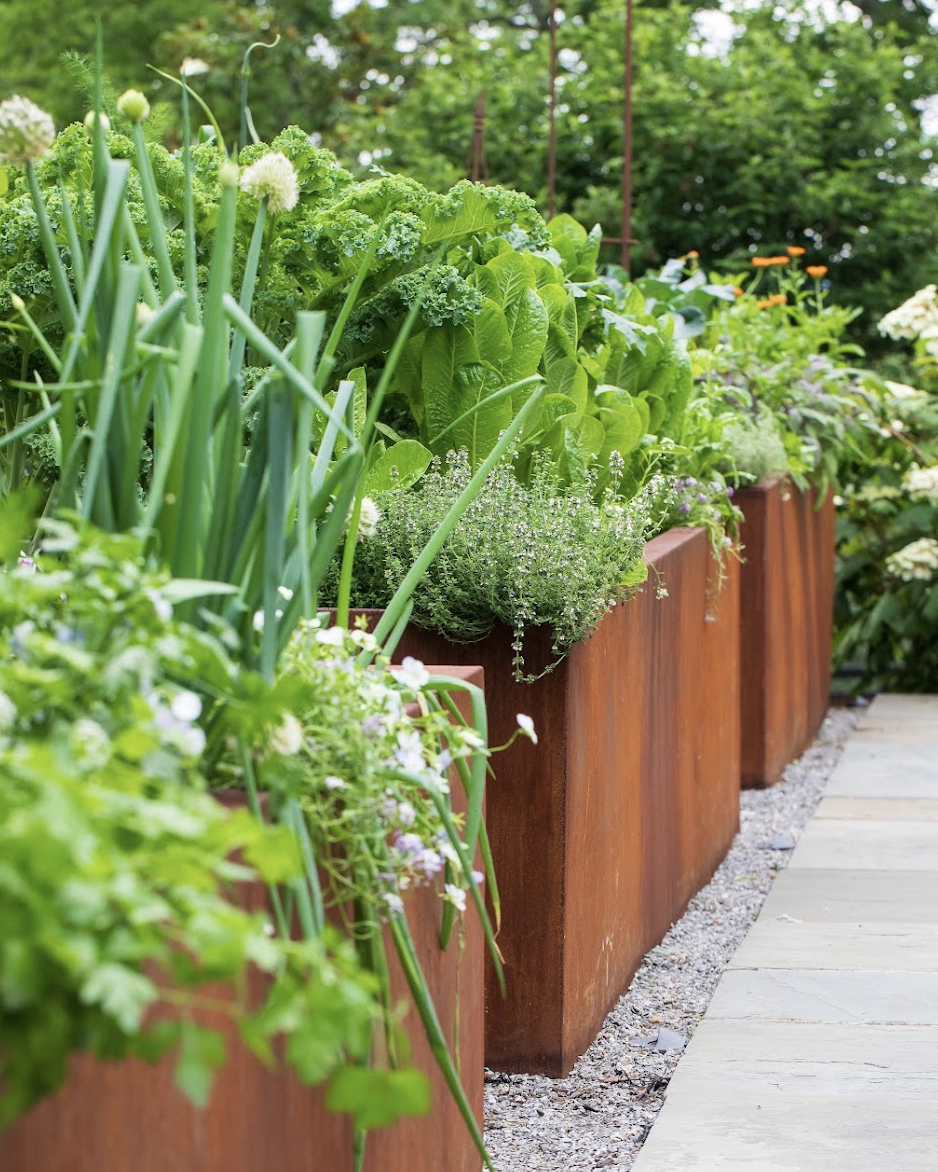
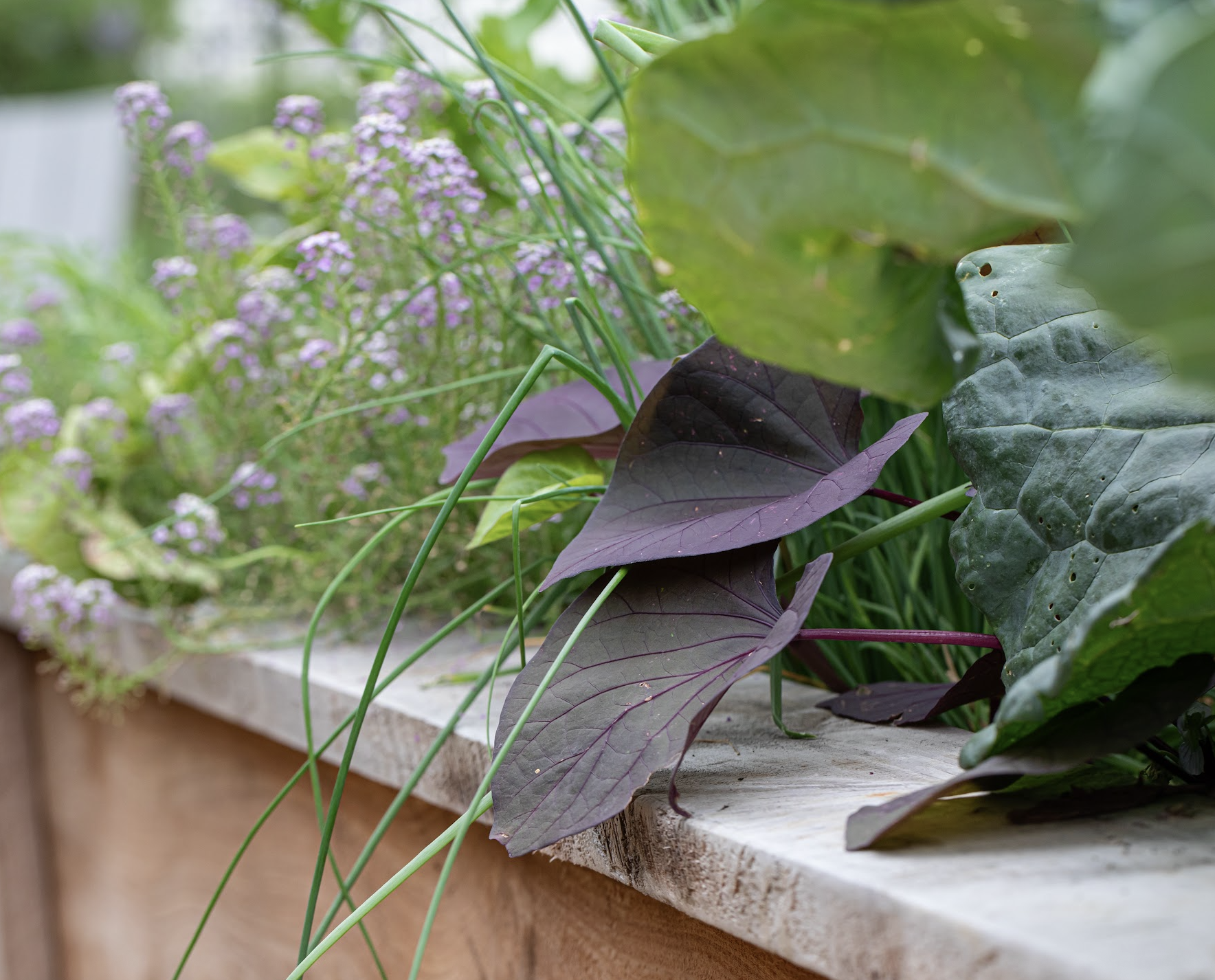
Scallions bolt upright, Romaine and kale fill the space, and thyme tumbles at the corner, left. Alyssum and sweet potatoes will soon tumble over the edge, while chives thrill and tuscan kale fill, right.
Beauty and Bounty
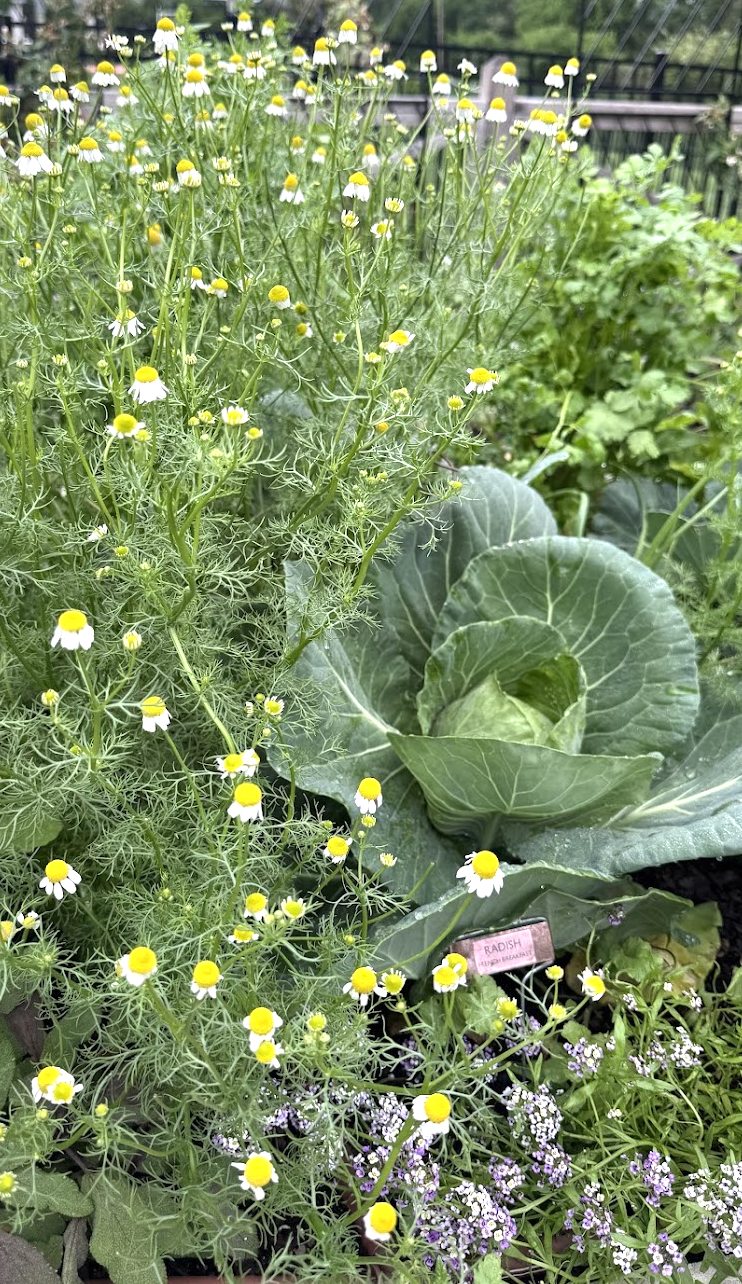
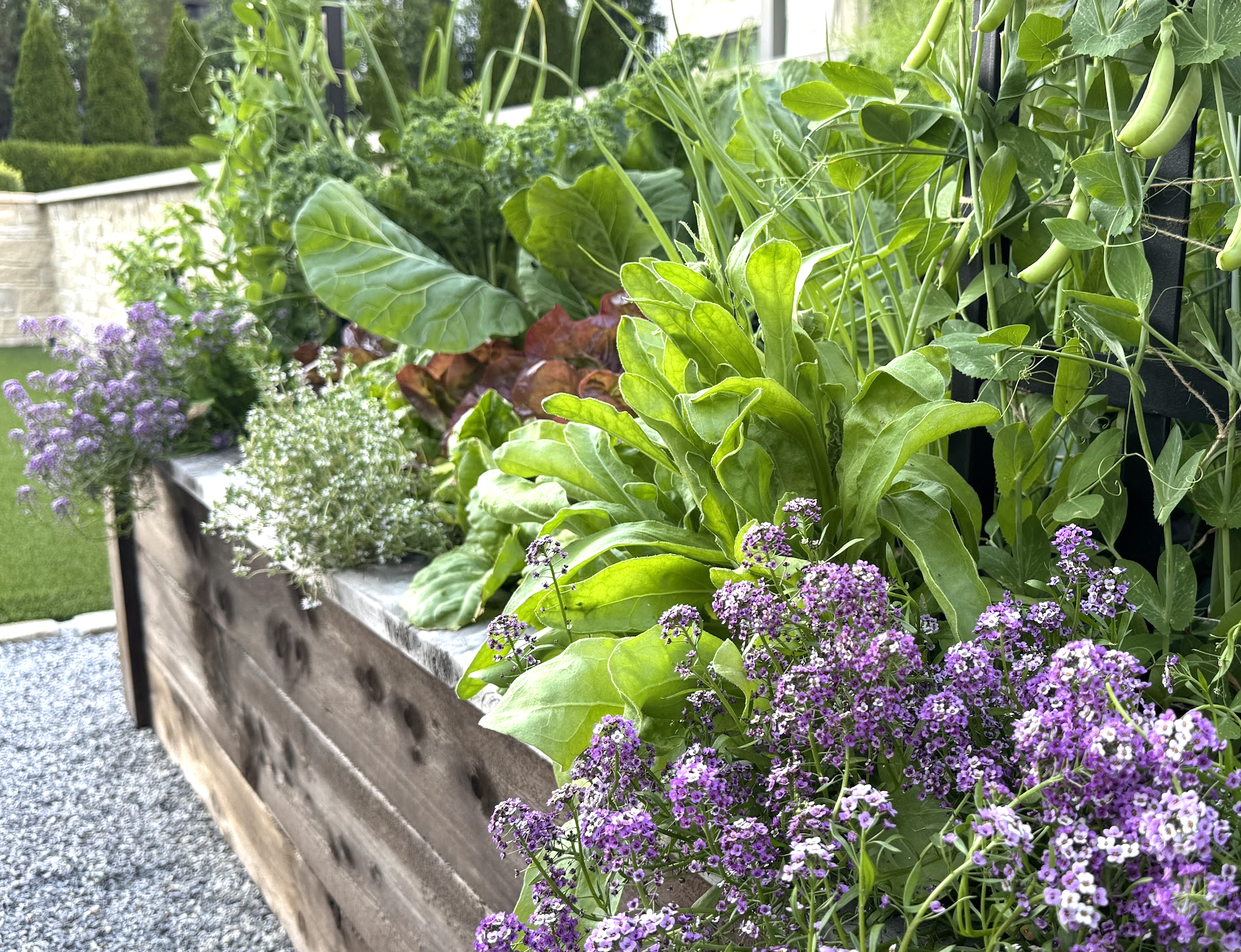
Chamomile is an edible flower, and it’s light, airy color creates a beautiful contrast against broad cabbage leaves, left. Alyssum makes the lemon sorrel look lush, right.
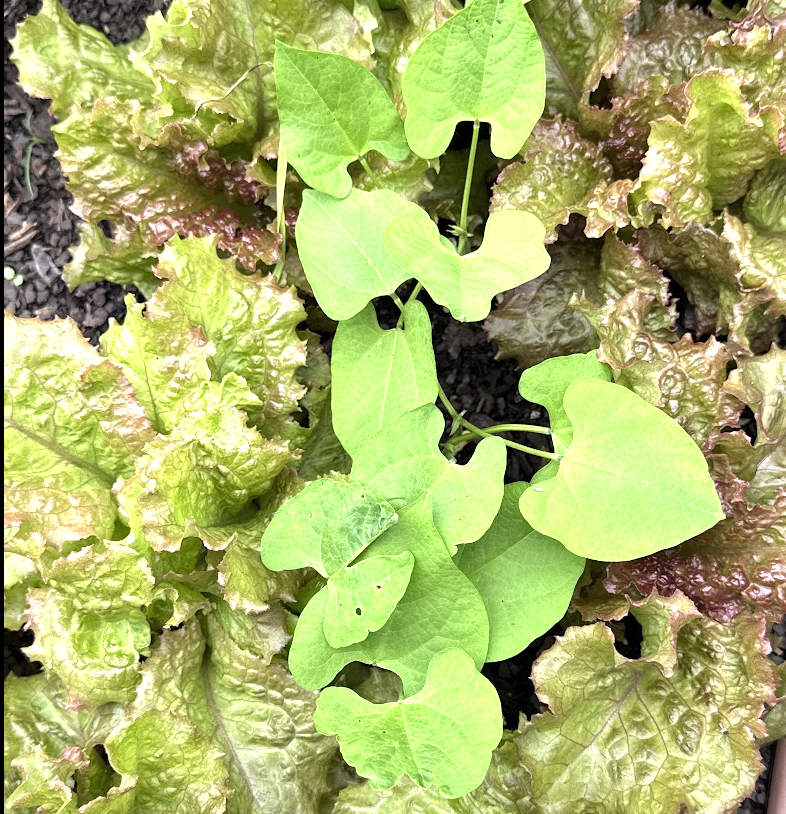
Make Room for What’s Coming Next
Pair plants with different growing seasons so that one crop finishes just as another needs more room. Warm season beans will eventually take over the space when cool season lettuce gets harvested, left.
Arrange Plants in Lines and Layers
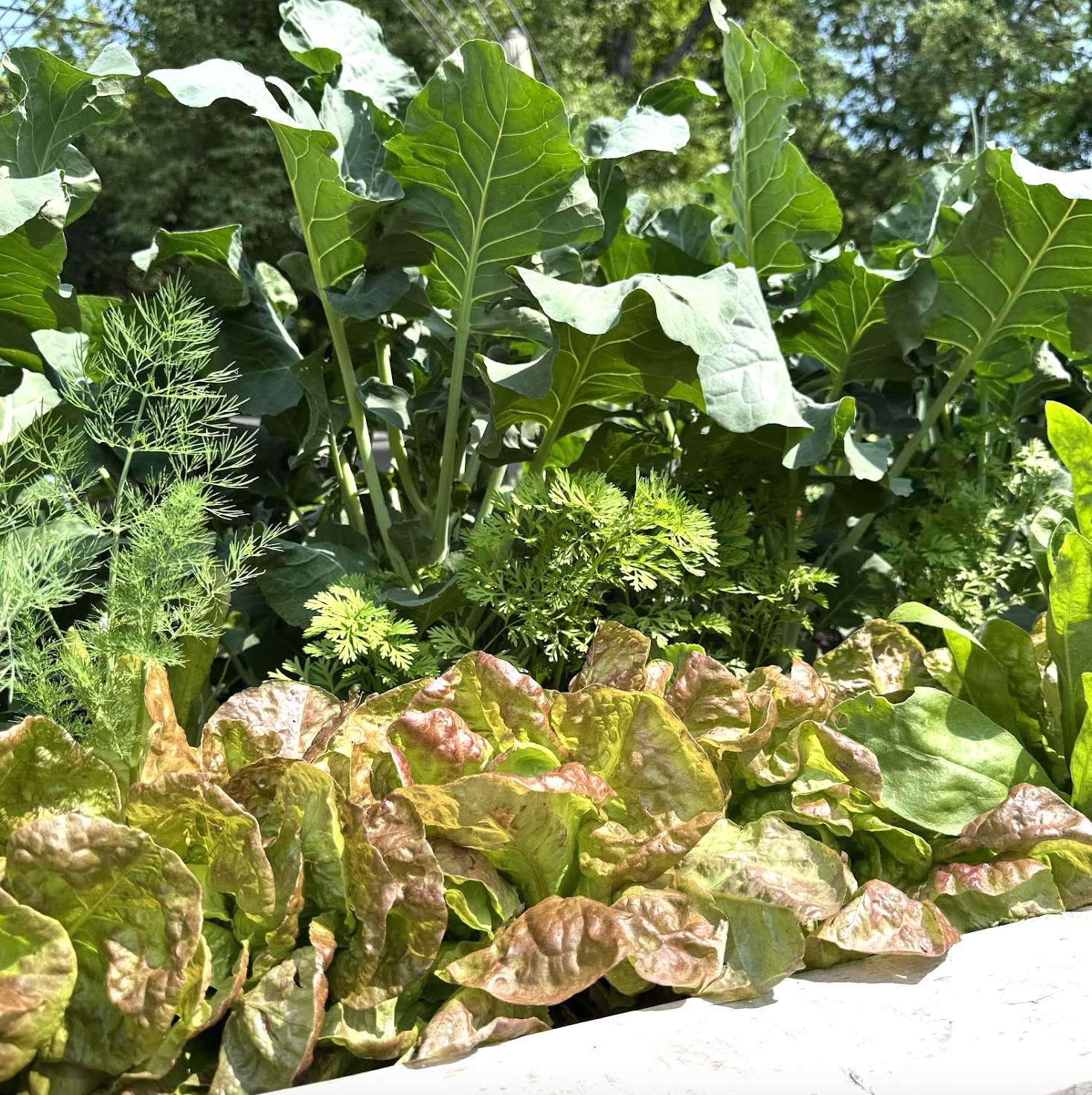
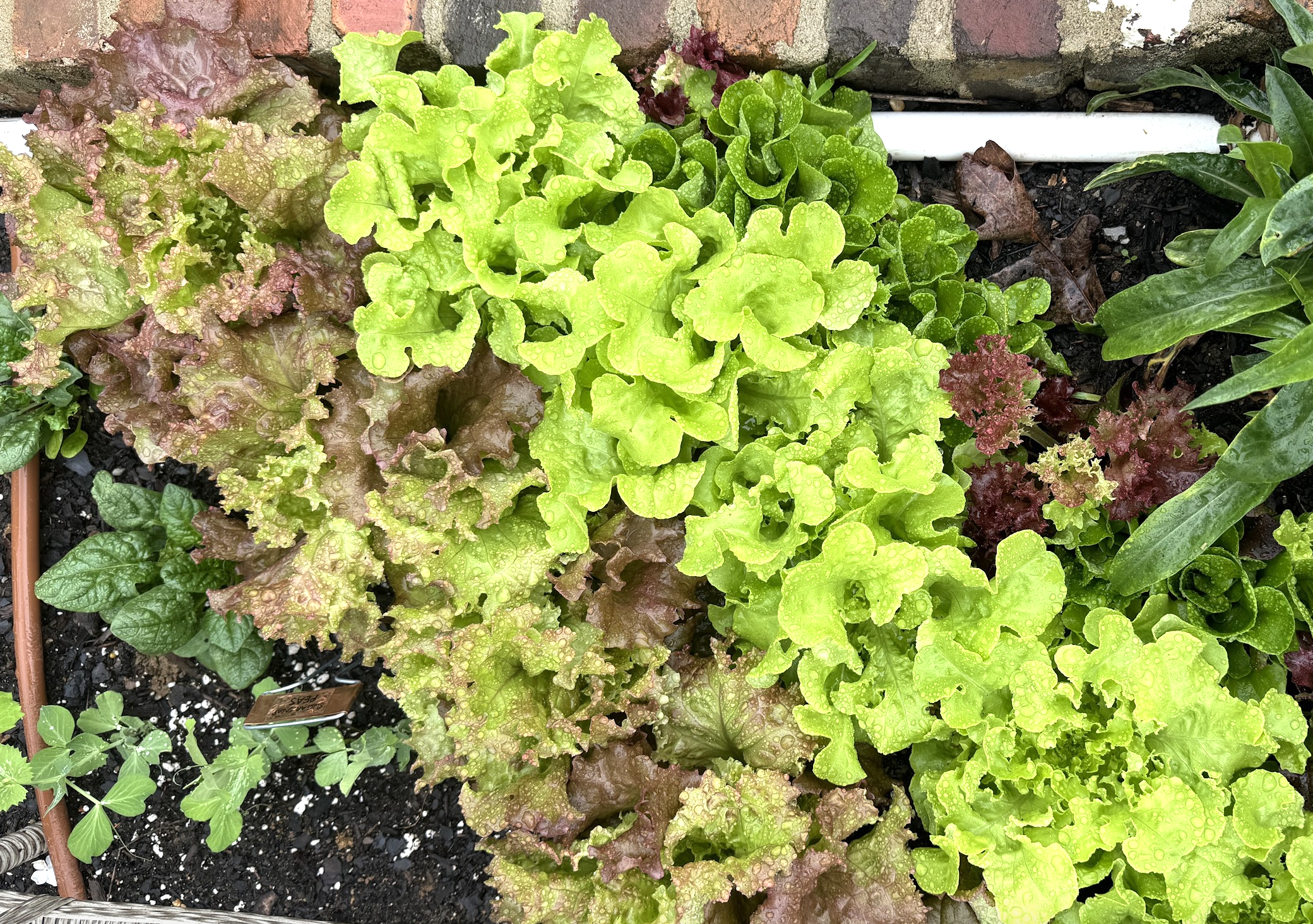
Lettuce can fill in on the edge of the garden while broccoli and dill tower above, left. Salanova, buttercrunh, and red leaf lettuce were planted in lines to across brick raised beds, right.
Just because…
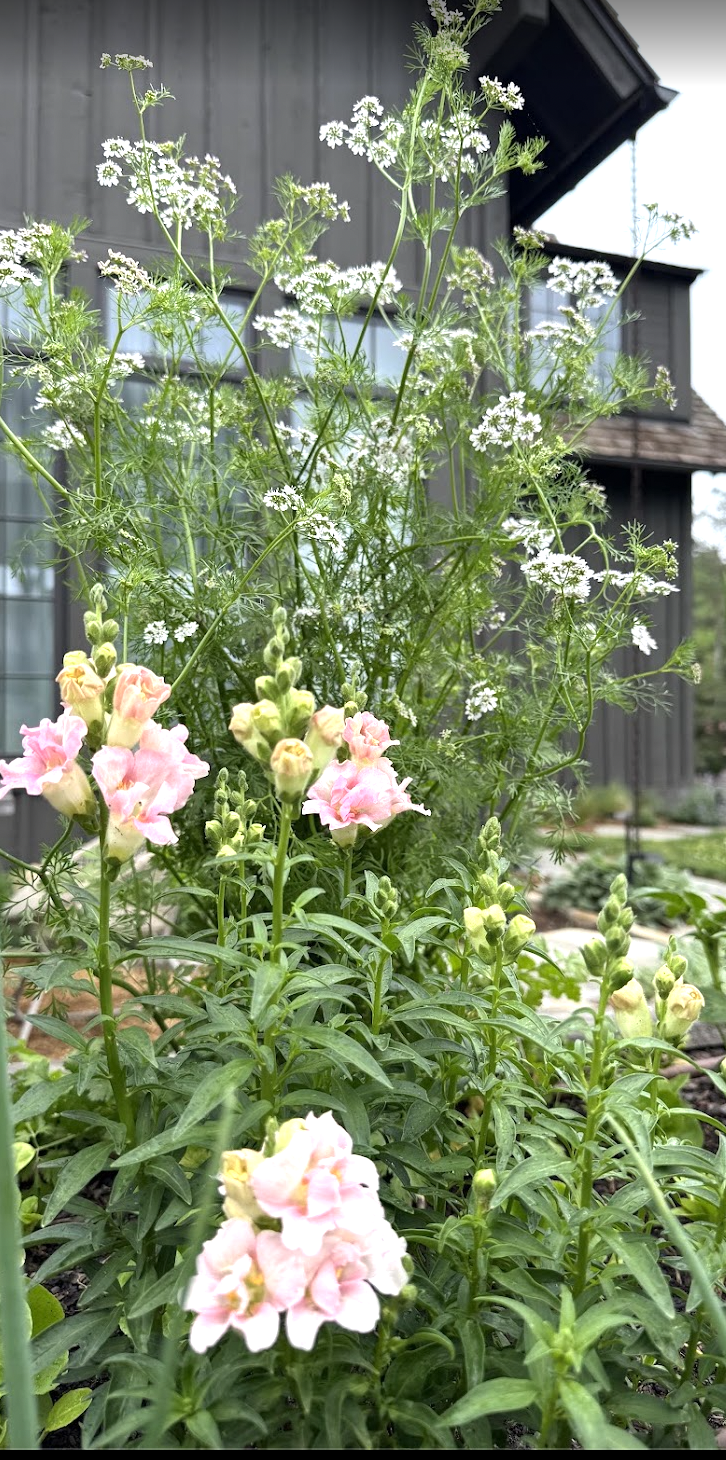
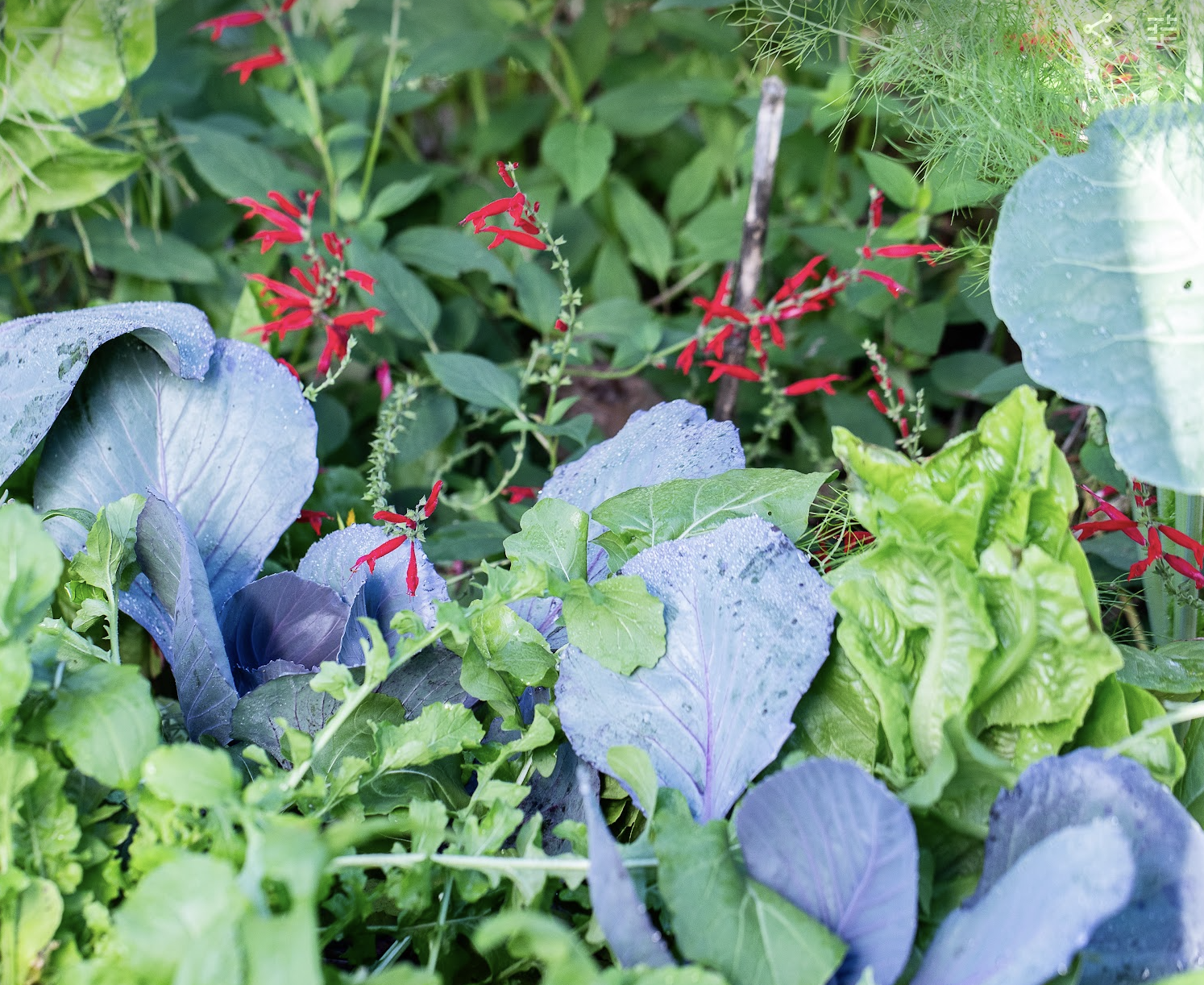
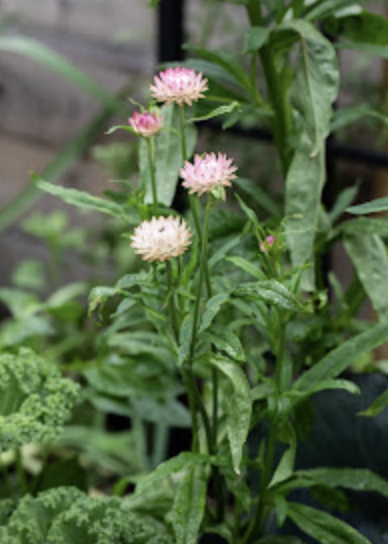
Why not add more flowers? Here are some of our favorites. Snapdragons and bolting lettuce, far left. Cabbage, arugula, and sage, middle. Strawflower, right.
