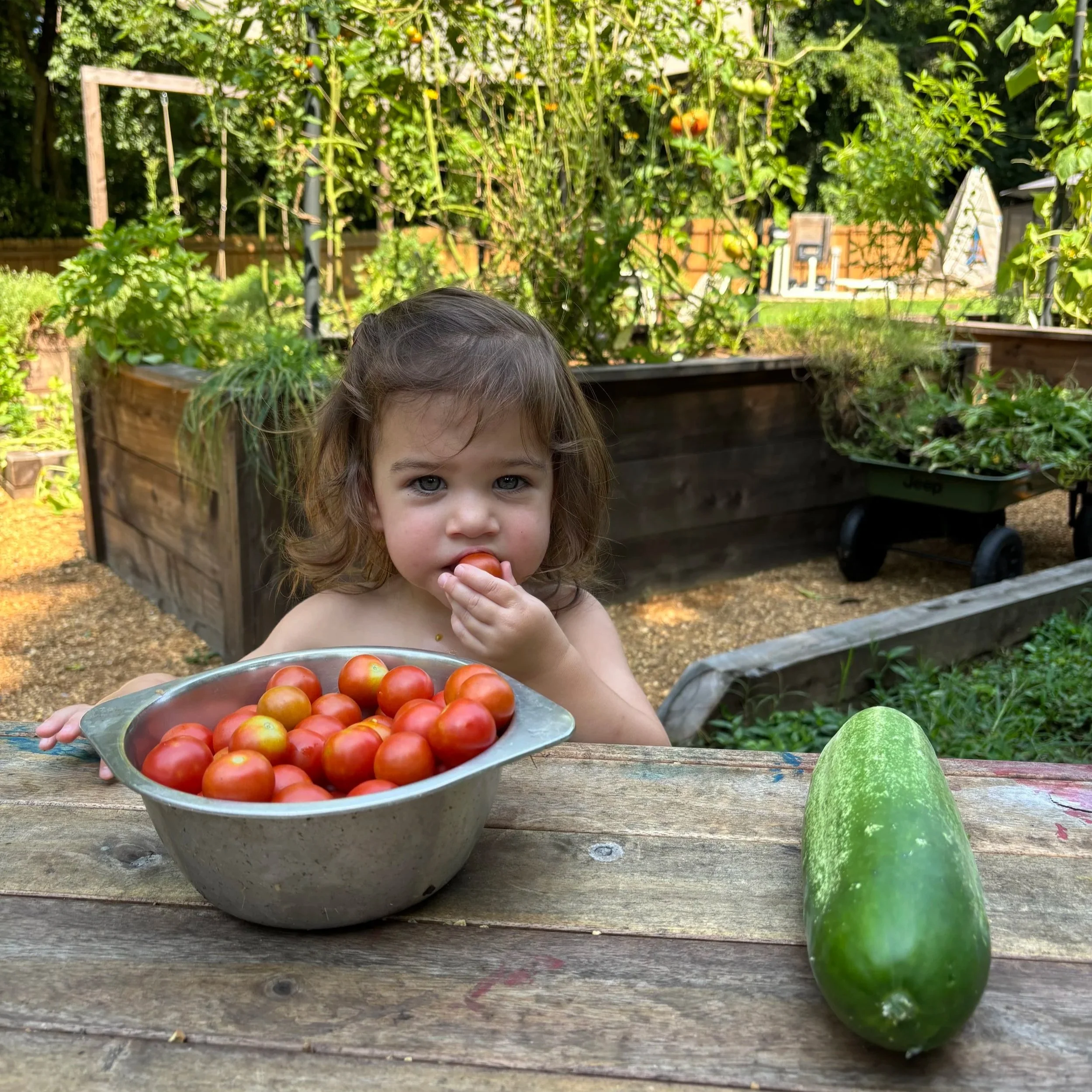
As we near the completion of every new garden, we send out a questionnaire to ask clients what vegetables they want to plant, a veggie “pick-list.” In May and June, the list is extensive:
Tomatoes? Slicers? Cherry tomatoes? Sauce tomatoes?
Peppers? Hot or sweet?
Cucumbers? Pickling or English?
Okra? Eggplant? Basil? Melons? Squash? Zucchini?
The options can feel endless. Summer is generous like that. It gives us vines, fruits, flowers, abundance, color, and the kind of harvests that start to pile up on the kitchen counter faster than we can cook them. But inevitably, new clients will ask about lettuce.
Where is lettuce on this list? All of these tomatoes and squash sound great, but what I really want to know is: where is the arugula?
I get it, sister.
When it’s hot outside, we crave salad. A big wedge of iceberg. A bowl full of romaine. Something cool and crisp that goes beautifully with all those tomatoes we’re finally harvesting. It makes total sense in our minds: tomatoes are summer food, lettuce goes with tomatoes, therefore lettuce should be a summer crop.
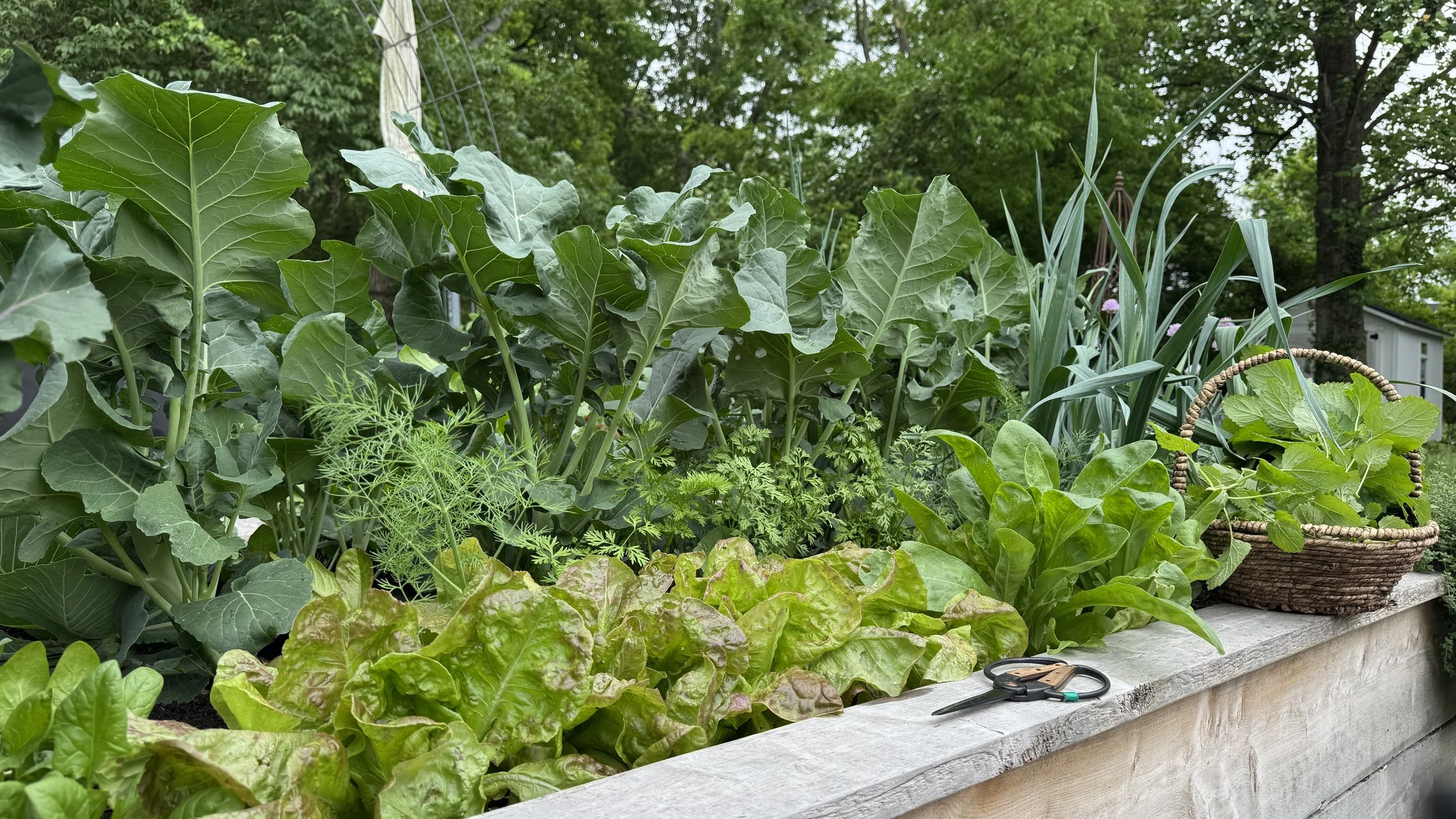
But the garden does not see it that way.
Lettuce is not a natural summer phenomenon. At least not here. Not in Tennessee. Not when the air is heavy, the sun is blazing, and the soil feels like it has been preheated.
Lettuce is a cool-season crop. It wants the conditions of spring and fall: mild air, cooler soil, steady moisture, and a little gentleness from the weather. When lettuce gets hot, it panics. It bolts. It turns bitter. It stretches upward and starts thinking about seed production instead of becoming the tender, crisp salad bowl we had in mind.
That does not mean lettuce is impossible in summer.
It means lettuce in summer is controlled.
It needs shade cloth. It needs consistent irrigation. It needs the right varieties. It often needs to be harvested young. It needs a gardener who understands that they are not simply planting lettuce; they are creating a tiny, managed environment where lettuce can pretend, briefly, that it is not July.
And there is nothing wrong with that. Gardeners have been coaxing plants into unusual circumstances forever. But I do think it helps to name the difference between what a season naturally wants to grow and what we are asking it to tolerate. In summer, the garden is not broken because it refuses to give us romaine. It is simply telling us what season we are in.
So when clients ask for summer lettuce, I often try to translate the request. Usually, what they really want is something fresh. Something green. Something they can harvest often. Something that makes dinner feel lighter, brighter, and more alive.
And the good news is that summer does have greens. They just are not usually lettuce.
Swiss chard is one of my favorite answers. It is beautiful, abundant, forgiving, and much more willing to stand in the heat than lettuce. The young leaves can be chopped into salads, and the larger leaves can be sautéed, folded into eggs, stirred into soups, or used anywhere you might use a cooking green.
Sweet potato greens are another summer secret. Most people grow sweet potatoes for the tubers, but the leaves are edible, tender, mild, and incredibly generous in hot weather. While lettuce is collapsing dramatically in the heat, sweet potato vines are usually just getting started.
There are also heat-loving greens like Malabar spinach, New Zealand spinach, and amaranth. They are not true lettuce substitutes, and I would never pretend that they are. They have their own textures and personalities. But they are worth knowing because they remind us that “greens” do not have to mean “lettuce.”
And then there are the summer salads that do not rely on lettuce at all.
Tomato, cucumber, basil, and sweet pepper.
Watermelon, mint, and feta.
Chopped herbs with lemon and olive oil.
Grilled squash with basil and a little vinegar.
Cucumbers sliced so thin they become their own kind of cool, crisp relief.
Because the real trick is not learning how to make July grow lettuce.
It is learning how to eat like it’s July.