Q&A: My broccoli hasn't produced and it's time to plant tomatoes. What do I do?
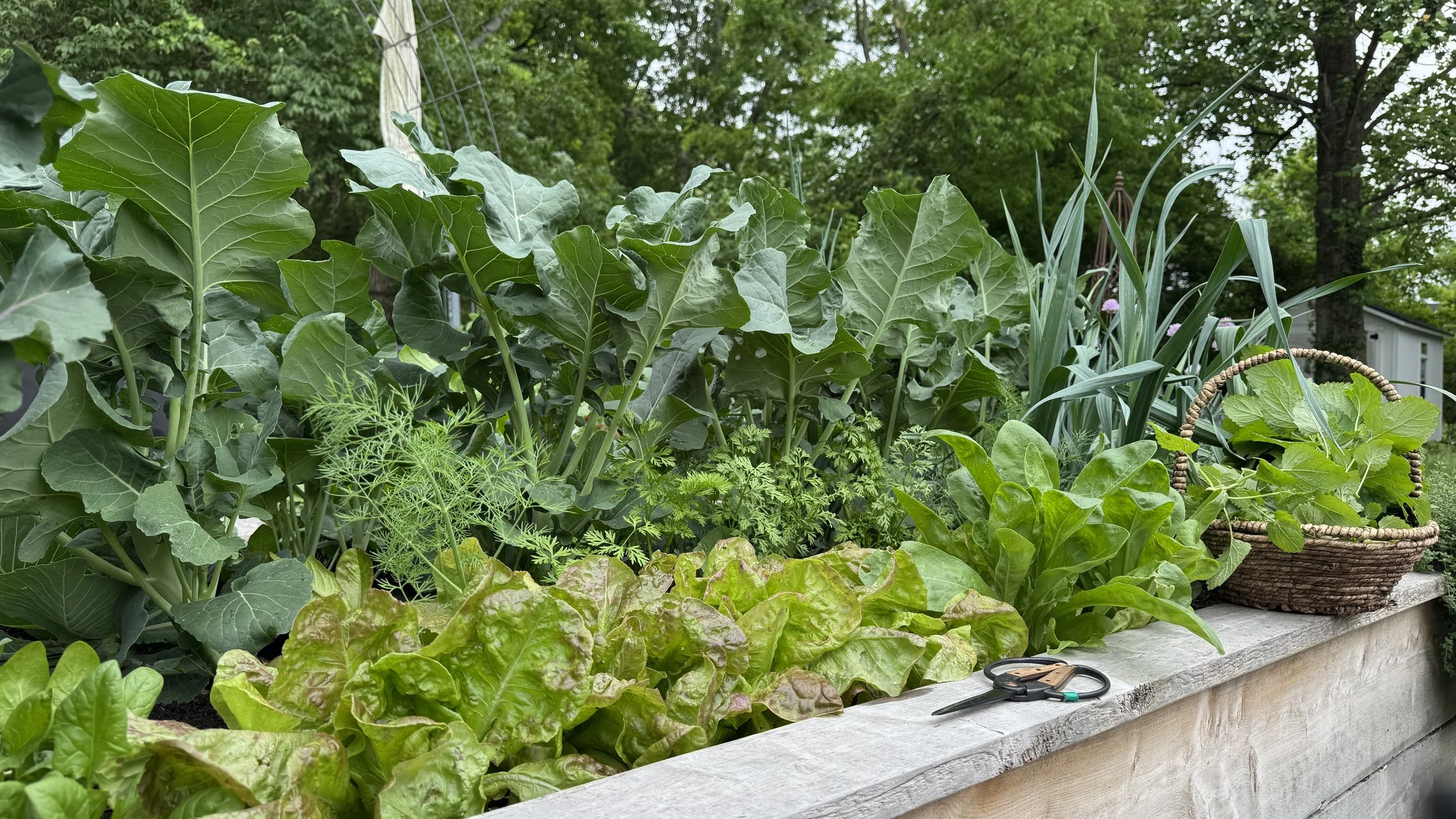
"It depends" — and we mean that in the best possible way. This is one of those questions where the right answer is genuinely different for every garden and every gardener. Some people love a hard re-set, a clean slate, a seasonal page turn. In the TKG Garden Care program, we go for a slow transition, taking advantage of the long growing season in our region to tuck in summer plants as spaces open up over the course of the late spring and early summer. If you want to adopt this approach, here are a few things to help you decide whether a cool-season crop stays or goes:
Pull it if:
It's bolting or about to — once spinach, cilantro, or arugula sends up a flower stalk, the flavor turns bitter and the plant is basically done.
Same goes for anything that looks diseased, pest-ridden, or just plain tired. If it's not producing and it's not going to, that space is better used by something that will.
If you’ve had your fill of any plant and want to transition your menu. Reducing to one or two kale, collards, or Swiss chard (which have probably grown very large by now) will still give you plenty to eat for the next couple of months while giving you space back.
Leave it if:
It still tastes good and you are enjoying it. (This is the whole point of the garden after all!)
Is healthy and has yet to give you a harvest. Broccoli is a great example — we've harvested from our own garden as late as May 31st in past years. If the heads are still sizing up and the weather is holding mild, give it another week or two. It'll tell you when it's done. Root crops are another good candidate for leaving. Don’t give up when you’re almost at the finish line!
You can fit in plants nearby, and know you will harvest in the next couple of weeks. Maybe you don’t want to pull out lettuce and arugula yet because you are still loving daily salads. Plant a pepper or eggplant right next to your lettuce and let it serve as living mulch, keeping your soil covered over the next couple of weeks as you continue to harvest.
What if you need vertical or trellis space that’s being used? For snap peas specifically, here's one of our favorite slow-transition moves: go ahead and plant your tomato transplant right next to the pea trellis now. Let it root in and get established while the peas finish their last few weeks. When the peas give out, pull them down, cut the stems as soil level and leave the roots in the soil to help fix nitrogen — which the tomatoes will love. Let the tomatoes grow up into that same vertical space — same trellis, new crop, seamless handoff.
This is how we manage transitions in our garden care program too. Rarely a hard reset, almost always a slow handoff. The season here in Middle Tennessee is long and forgiving, and your garden can unfold the same way.