

Q&A: My plants dying before summer is over! Did I do something wrong?
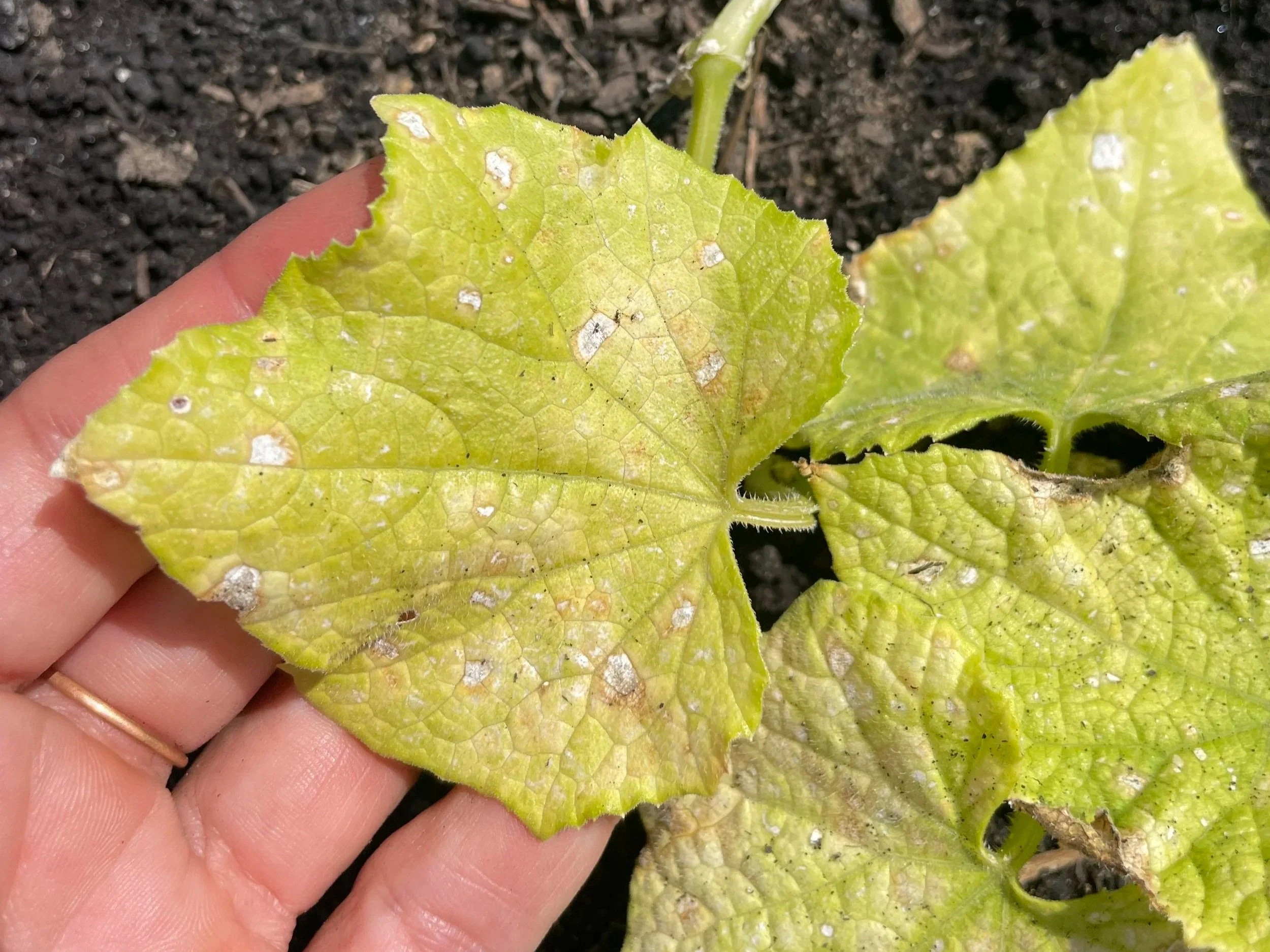
Ah the case of the crispy cucumber plant….
When a plant dies before we think it should, our first instinct is often to search for the mistake. Did I water it enough? Did I water it too much? Did I miss a pest? Should I have fertilized it?
Sometimes there is something we could have done differently. Other times, a plant’s decline is the result of life span, weather, disease, or insect pressure that no gardener can completely prevent. Learning to separate what is within our control from what isn’t can make us better gardeners—and keep us from taking every dead cucumber personally.
What is in our control
How often we look closely at our plants
You may have heard the saying, “The best fertilizer is the gardener’s shadow.”
That’s true with some things. Many insect problems are manageable when caught early. Squash bugs lay clusters of bronze-colored eggs on the undersides of leaves. Those eggs can be removed or crushed before they hatch. Young gray nymphs can be knocked into soapy water. Once the population includes large numbers of mature squash bugs, control becomes much more difficult. Squash vine borers also offer early clues. A squash plant that suddenly wilts may have a small hole near the base of its stem surrounded by moist, sawdust-like waste. If caught early, it is sometimes possible to slit the stem, remove the larva, close the wound, and cover that section of vine with soil.
Harvesting frequently also keeps our plants healthy. A cucumber left on the vine too long signals that the plant has reproduced. Seeds are in the making, and the next generation is ready to carry the torch. That’s all it takes for a cucumber plant to wind down— who cares if you just happened to miss the green gargantuan weighing down the vine all week? Your plant is on it’s way to retirement, buddy.
How we water
Watering at the soil line keeps foliage drier and reduces the splashing that can move disease organisms from the soil onto leaves. Watering early in the day also gives wet foliage time to dry before nightfall. Consistent watering is especially important during extreme heat. A thirsty plant may wilt dramatically in the afternoon, but it should generally recover after watering or as temperatures cool. A plant that remains wilted the following morning deserves a closer inspection.
Airflow and spacing
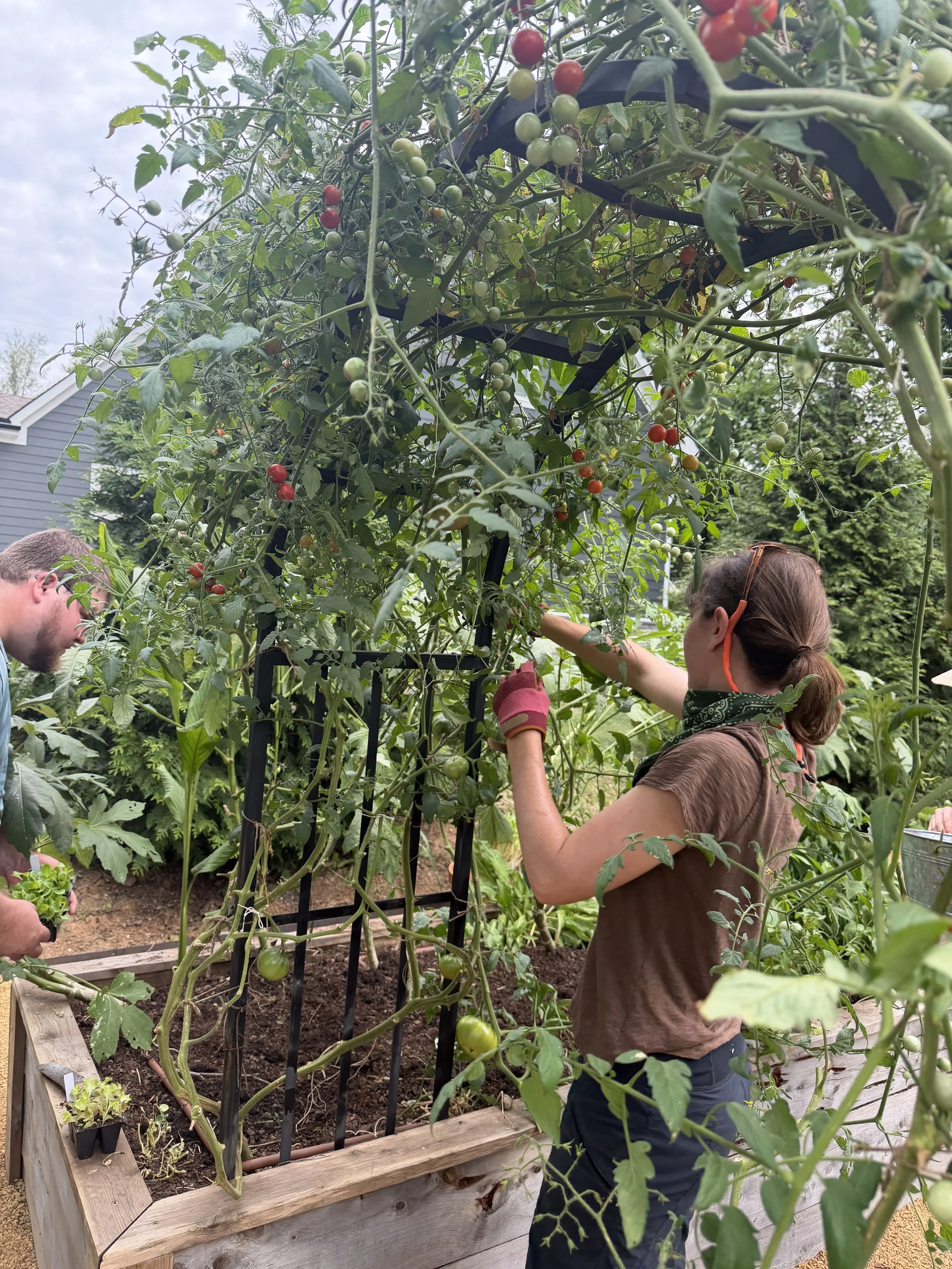
Fungal diseases thrive when leaves remain damp and air cannot move easily through the garden. Giving plants adequate space, pruning overcrowded tomato foliage, and trellising cucumbers can help leaves dry more quickly. These practices will not eliminate fungal disease in Tennessee’s humidity, but they can slow its spread.
Succession planting
Cucumbers and summer squash grow quickly and produce heavily, but they are not always long-lived plants—especially during a hot, humid Tennessee summer.
Instead of expecting one cucumber vine or zucchini plant to remain healthy from spring until frost, we can plant a second round several weeks after the first. These younger plants can begin producing as the original planting loses vigor. Succession planting does not guarantee that the second crop will avoid pests or disease, but it keeps the whole harvest from depending on one aging group of plants.
What’s not entirely in our control
Some causes of plant decline overlap, but they generally fall into three broad groups: the natural lifespan of the plant, pest pressure, and pathogens.
The natural lifespan of the plant
Sometimes a plant is not dying from one identifiable catastrophe. It has simply spent months producing fruit while enduring heat, insects, irregular rainfall, and disease pressure.
Cucumbers and summer squash are particularly fast-growing and productive. Their decline in late summer does not mean they failed. A plant that gave us weeks of cucumbers before succumbing to mildew may have completed a perfectly successful season. So shrug your shoulders, say goodbye, and plant something new.
Pests and Pathogens
Our gardens are not closed systems, and alongside the bees and butterflies that we love in the garden, we also get some pesky bugs. Some, like the squash vine borer larvae, burrow in our plants and cause physical damage. By the time we detect their existance, the whole plant has collapsed and the damage is too serious to repair. Other bugs, like the cucumber beetles or the leaf footed bugs, forget to cover their mouths when they cough, if you know what I mean. When they fly into our gardens, it’s like a kindergarden classroom. All kinds of pathogens can hitch a ride on their feet and mouths. When the beetles are feeding on cucumber and squash plants, the bacteria enters, spreads and restricts movement of water through the vine. The result is a plant that looks desperately thirsty even when the soil is moist. Once a plant is infected, there is no treatment that will cure it. Additional water will not reopen its vascular system, and fungicide will not treat a bacterial disease.
Fungal and fungus-like diseases are also common in Tennessee’s warm, humid summers. Powdery mildew produces white patches on squash and cucumber leaves. Tomatoes may develop early blight, beginning with spotted and yellowing leaves near the bottom of the plant. We can reduce disease pressure by improving airflow, watering at the soil line, removing infected plants, and choosing resistant varieties. But we cannot eliminate every pathogen or remove humidity from the summer. Even a well-maintained garden may develop disease by August.
In sum…
The goal is not to keep every plant alive until frost. The goal is to recognize what happened, respond when a response is possible, and resist blaming ourselves when it isn’t. Sometimes the most successful thing a gardener can do is pull a declining plant, make a note for next year, and plant something new.
