Short answer: well before the first frost, which averages out to around the end of October in our area. That is this week or next, so if your lemon tree is still on the patio, today is a good day.
We get this question from gardeners all over Middle Tennessee. Some grew up in California, where lemon, avocado, and olive trees live outside all year. Plenty of others are simply new to gardening and have asked us, "Can I grow a lemon tree? Can I grow avocados?" The underlying question is the same: what is the coldest this plant can handle? That is its frost tolerance, and it is the first thing worth knowing about anything you grow in a pot. Lemons, limes, and avocados are not built for a Tennessee winter, so they need to come inside.
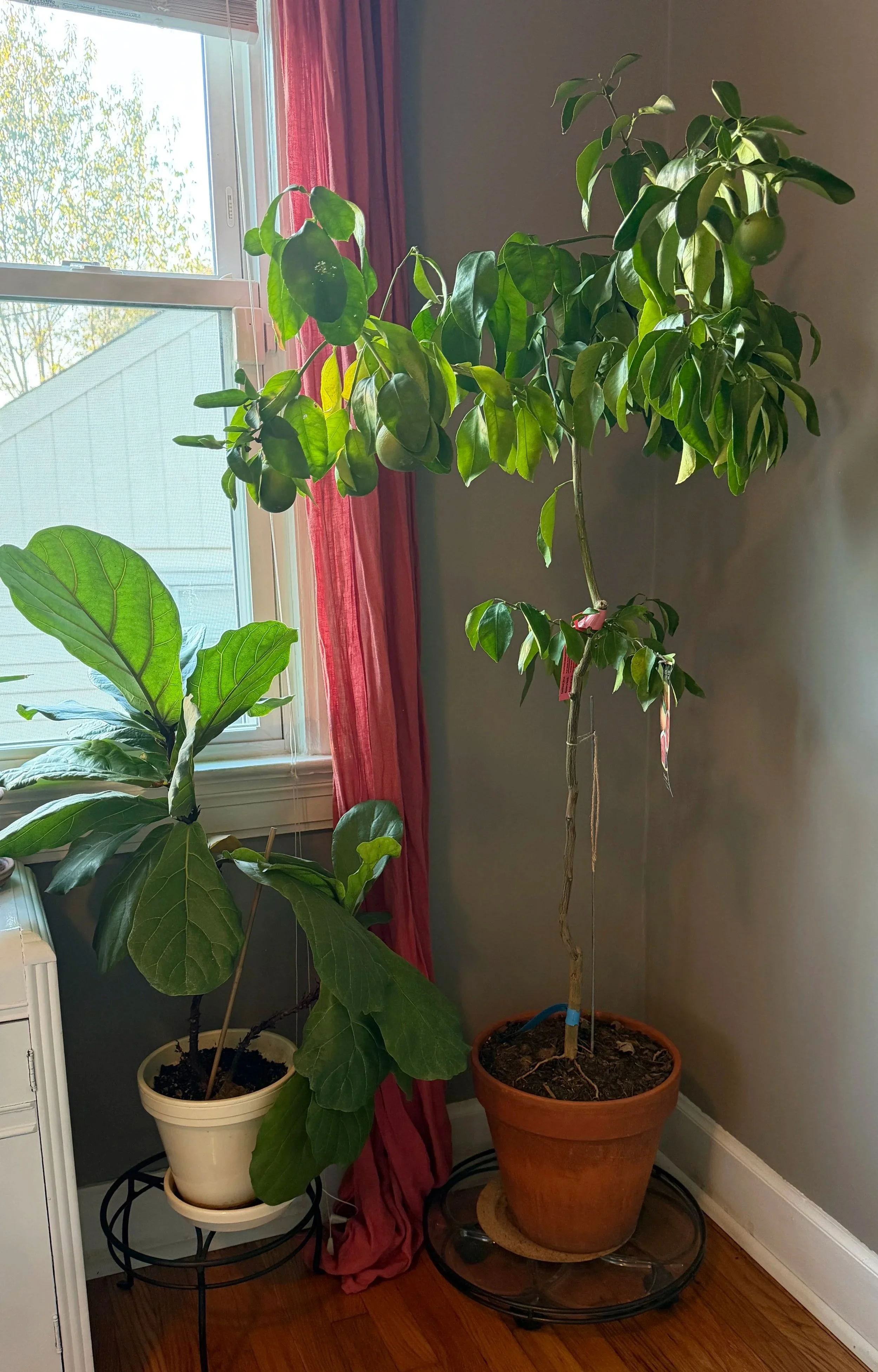
It is more than a frost question
The native trees outside your window handle winter by going dormant. They slow down growth to a crawl, shed their leaves, and store energy in their roots. Citrus doesn't really do this. Citrus trees are evergreen and never go fully dormant. They can even put on new growth if we have warm winter weather. But trees in active growth are injured more by cold than trees that have slowed down. (And we know extreme temperature changes are what define Middle Tennessee winters. Sigh.)
Some citrus can survive short stints below freezing, but why risk it? Bringing a pot inside is not just rescuing it from one freezing night. We are trying to give it the mild, steady fall and winter it would get in California or Florida: the whole plant, pot and soil included, kept out of the extreme cold/warm swings all season.
When to bring them in
Bring citrus indoors well before the first frost. Treat the first frost date as your final deadline, not your target.
What about my other tender plants?
The same logic applies to other frost-sensitive plants in pots, but every plant has its own limit. Look up the coldest yours can handle before you decide, and when in doubt, bring it in with the citrus.
Once they are inside
Citrus wants 8 to 12 hours of sun a day. Give it the sunniest window you have, out of drafts, and add a grow light when the winter days run short. Water less than you did outside, since growth slows, and make sure the soil doesn't stay soggy. Dry indoor air is hard on citrus, so add humidity where you can.
Expect some leaf drop
Don't panic if your tree sheds leaves after the move. UT Gardens says to expect some leaf and fruit drop as the plant adjusts to being indoors, and Cornell Cooperative Extension ties it to the change in light and humidity. In our experience the tree settles down and fills back in within a couple of weeks.
Watch for pests
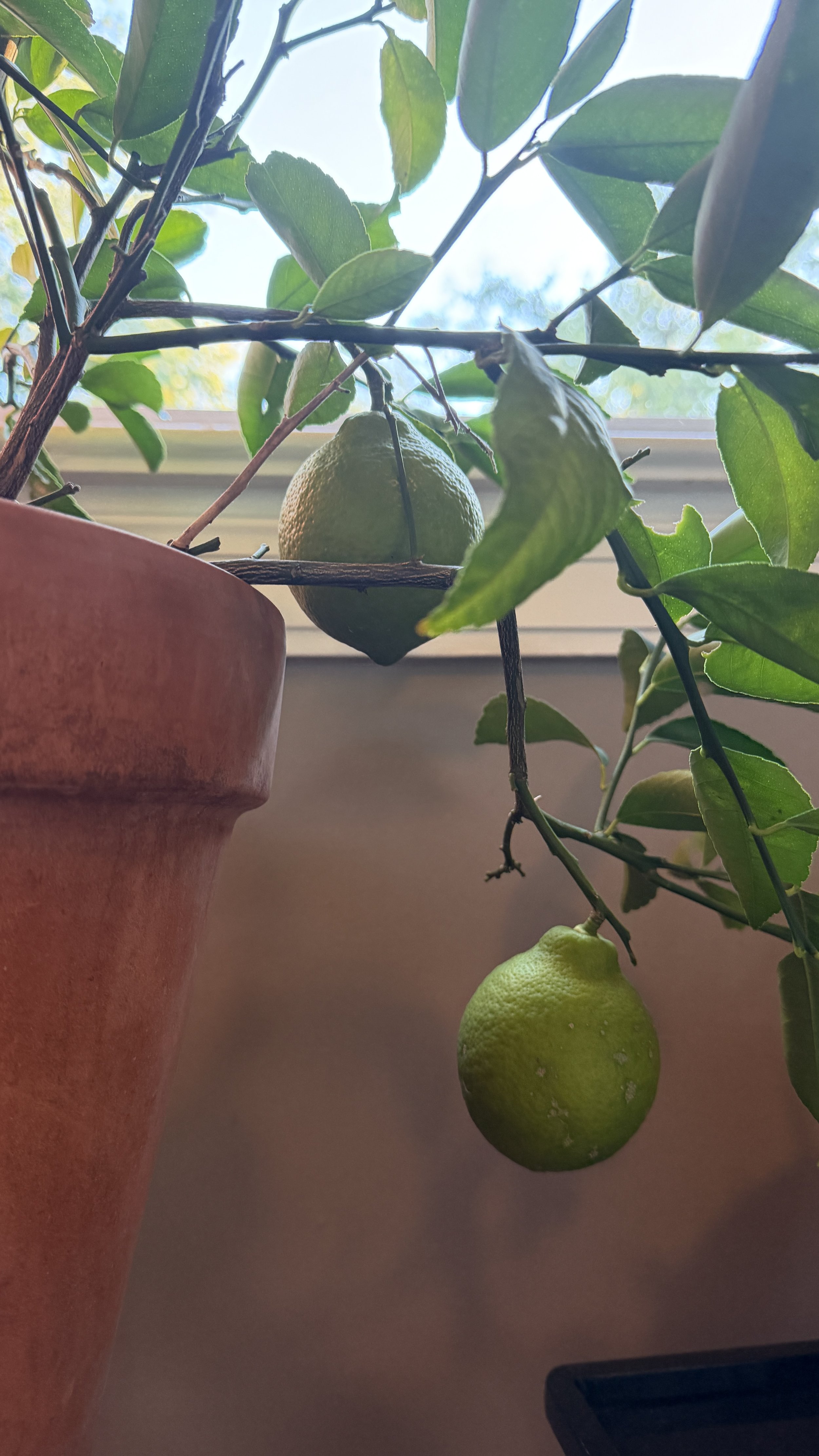
I deal with spider mites on my citrus every winter and I have to admit it's a pretty big bummer. Look for tiny yellow or white dots on the leaves, sometimes with fine webbing. Your first step is to wash the leaves with plain water and repeat as needed, then move to insecticidal soap or diluted neem oil if the mites keep coming back. I usually just plan to do this every couple of weeks through late winter/early spring. This is one reason I'm glad my plants are fairly small. I can carry the pots into the bathtub or outside on sunny days to spray them down.
Enjoy the blooms
But here is the reward for all this fuss: your citrus is likely to bloom over the winter. Citrus blossoms smell amazing, and a tree in full bloom in late January or February is a real delight when everything outside is brown and gray. But wait! If you want fruit from those flowers, you will need to hand pollinate them indoors. Get your paintbrush out and move that pollen around.
Taking them back out
UT Gardens says to wait until spring weather is reliably above 50°F.
In spring, here is how to ease it out:
Start the tree in a partly shaded spot outdoors.
Over about two weeks, increase its sun a little at a time.
Finish in full sun, where citrus wants 8 to 12 hours a day.
Potted citrus takes a little effort, but a tree blooming in your window in February makes it worth it. Plus, there’s not much to do in the garden all winter, so let’s fill up the house with more plants!