

Q&A: What damage has this winter storm done to my garden?
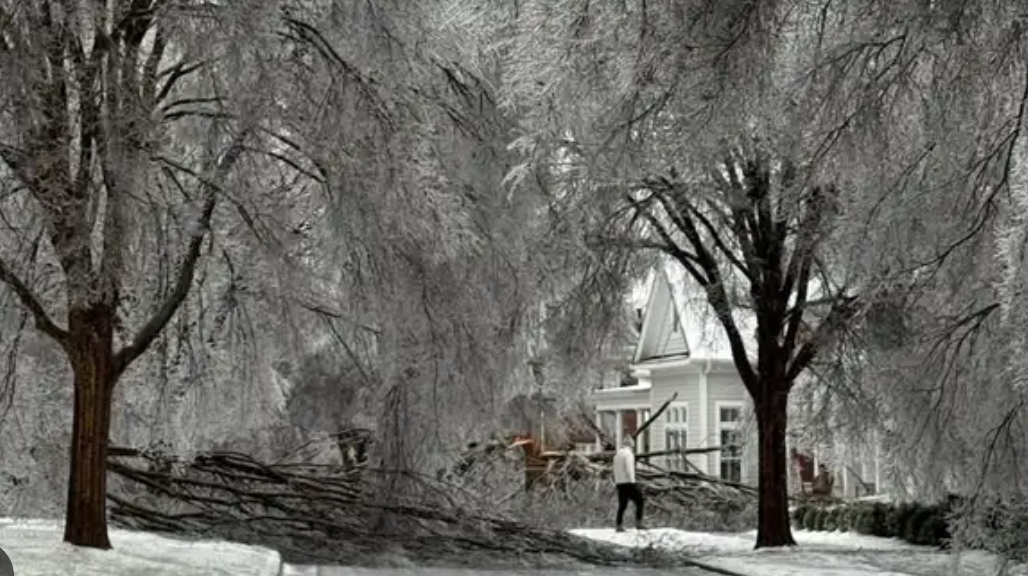
It has been a tough week in Middle Tennessee—truly heartbreaking to watch the majestic trees that have long stood watch over our neighborhoods split and fail under the weight of ice. That kind of loss lands deep. But while the damage to our canopy will take years to heal, our vegetable gardens live on a different timeline. Raised beds are, by nature, seasonal and resilient. They’re built for change, rest, and return—and after a storm like this, they’re far less fragile than they appear.
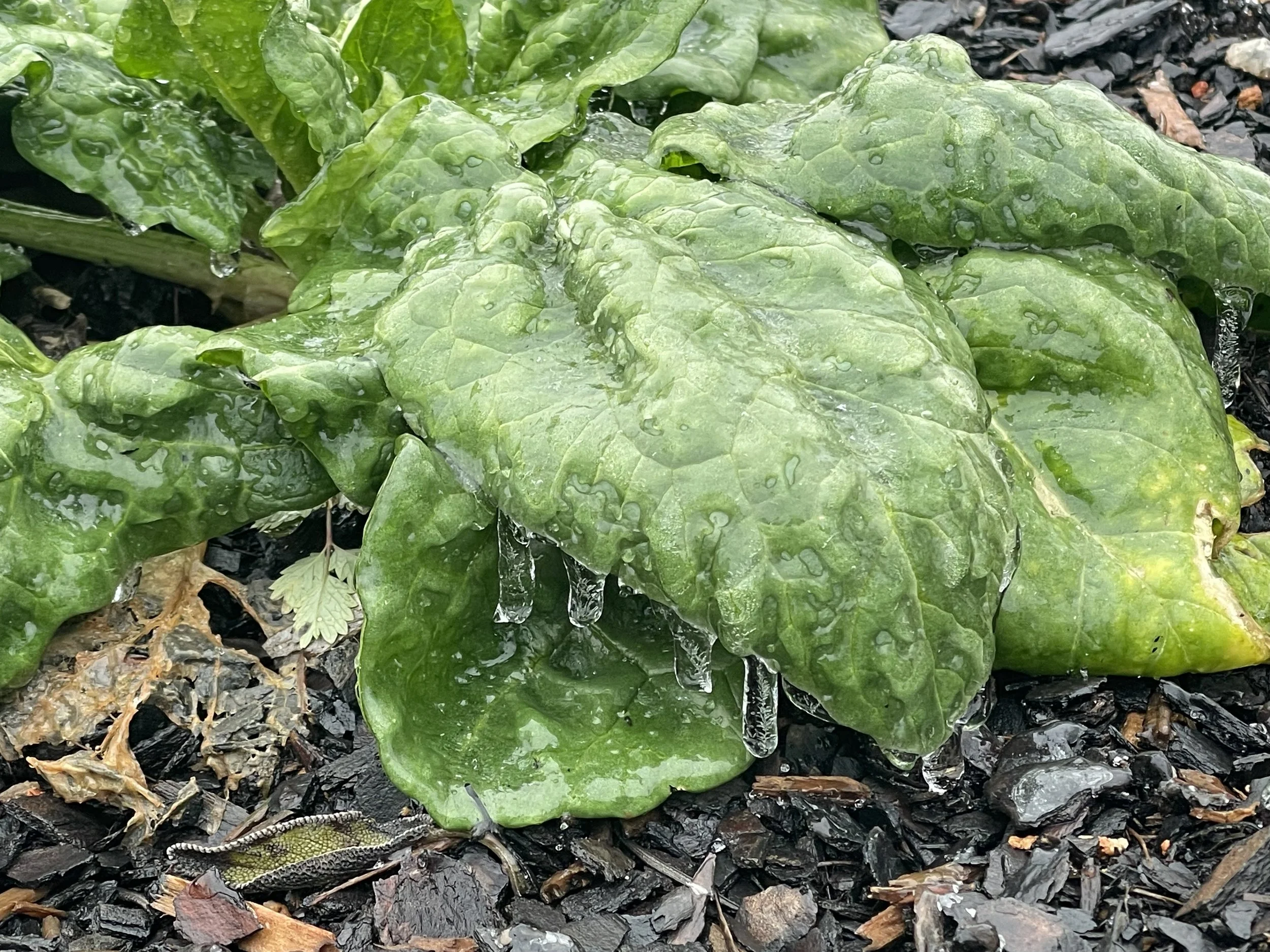
Among winter vegetables, there’s an important distinction. Some crops are truly freeze-hardy—kale, collards, spinach, carrots, beets, leeks. These plants can tolerate temperatures well below freezing and often get sweeter after a hard cold as they convert starches into sugars (the plant version of antifreeze). Others—lettuce, arugula, Asian greens, young brassica seedlings—are cool-tolerant but not freeze-proof. They’re comfortable down around 30°F, but extended time in the teens can damage their leaf tissue. These are the plants that often look fine during the storm, then collapse into mush once things warm up.
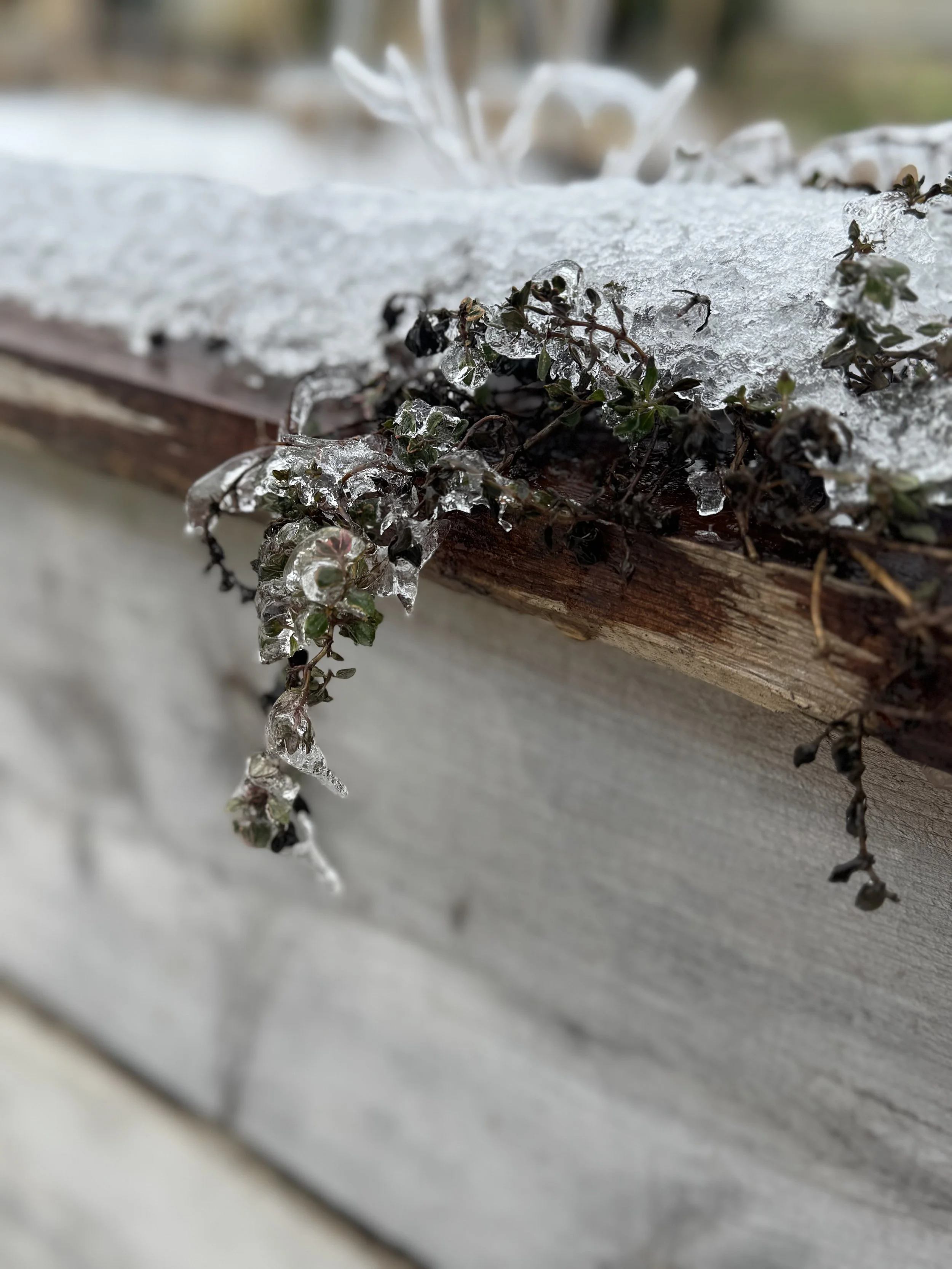
Perennial herbs follow a slightly different set of rules. Most are much tougher below ground than they look above it. Thyme, chives, oregano, mint, and sage often die back dramatically but return from the crown in spring. Rosemary and lavender are less forgiving—not because of cold alone, but because of cold paired with wet soil. In that way, raised beds actually help, offering better drainage during long, frozen stretches.
Snow and ice also play unexpected roles. Snow acts as insulation, protecting soil and roots from extreme temperature swings. Ice can damage leaves and add weight, but frozen soil itself isn’t the enemy. What causes real stress is repeated freeze-thaw cycles that can cause roots to push upward and cell walls to burst.
But that leads me to an important point: plant loss is essential in the garden, and in fact, everywhere. Leaves and stems that collapse under cold don’t go to waste—they slowly break down, returning nutrients and organic matter to the soil. Microbes and fungi get to work, improving soil structure and feeding the underground systems that support next season’s growth. Leaving spent plants in place also protects soil from erosion and temperature swings. In winter, what looks like death is often the beginning of renewal.
What to do as we thaw out this weekend:
Leave things alone. Damaged foliage still protects plant crowns. Add mulch or leaves only if you can do so without compacting frozen soil, and keep it pulled back slightly from woody herb stems that need to breath and dry out.
What not to do: Don’t prune perennial herbs. Don’t fertilize. Don’t dig. And don’t rush to pull plants that look dead. Winter gardens reveal what survived slowly, often weeks after temperatures stabilize.
Winter storms are dramatic above ground. In the garden, they’re usually a pause, not a failure—a quiet, necessary season of rest that prepares the soil, the plants, and the gardener for what comes next.
