From Garden to Vase: Building a Balanced Bouquet
Valentine’s Day tends to make us think about flowers in a very specific way: a dozen red roses, wrapped in cellophane, celebrating love on one particular day. But more and more people are recognizing the joy of seeing, smelling, giving, and growing flowers of all shapes and colors, all year round.
This will be my 6th year of growing and cutting flowers from my garden and I’ve gotten pretty good at it. (Have I mentioned my State Fair Blue Ribbon Zinnia? Only 17 times? Wanna hear about it again?) But that success didn’t come without learning a few things along the way.
One lesson that’s still particularly hard for me, especially at this time of year when I'm browsing all the seed catalogs, is to be selective about what flowers I grow. My garden is a pretty good size, but it’s not infinite. More importantly, my available time to tend it isn’t infinite. Believe it or not, there have been summers when I actually felt burdened by the chore of needing to go out and cut flowers. (Ok, that sounds ridiculous right now when we are staring and bare, brown growing spaces, but it’s true!)
When we’re limited on time and space, the key becomes growing just a few flowers that work well together. If you dream of cutting flowers for your own holiday table, gifting a mason jar of blooms to a neighbor, or gathering bucketfuls of color just because it’s Tuesday, the trick isn’t growing every flower. Pick 1-2 varieties from each of the categories below and you’ll have gorgeous bunches any time you want them. The trick is to think about building your garden the way a florist builds a bouquet: with structure, contrast, movement, scent, and color harmony.
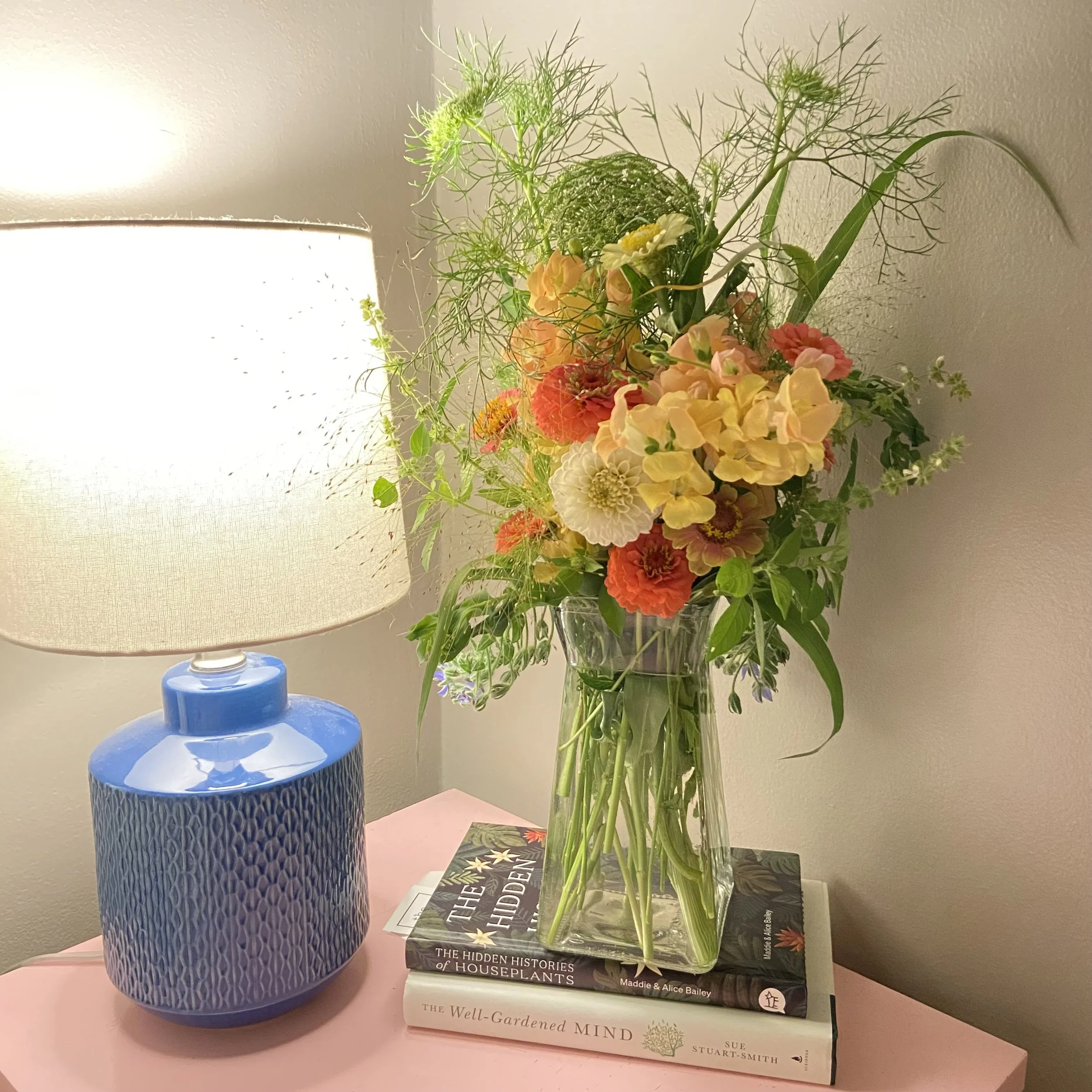
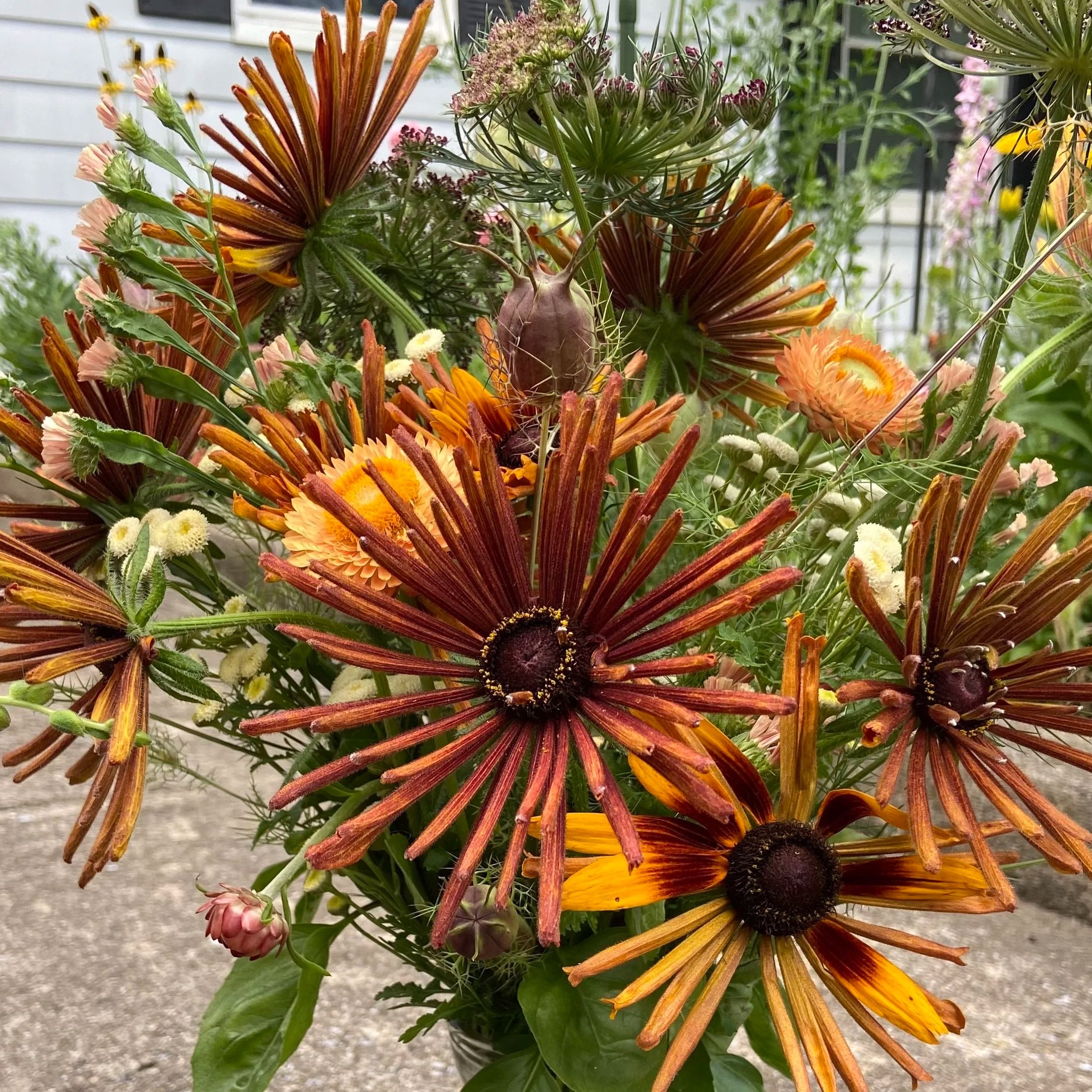
All the photos below are of arrangements made with my garden flowers. I’m not a professional, but I've been so pleased with the results using the categories below. Maybe this year I enter the flower arranging contests in the State Fair…🧐
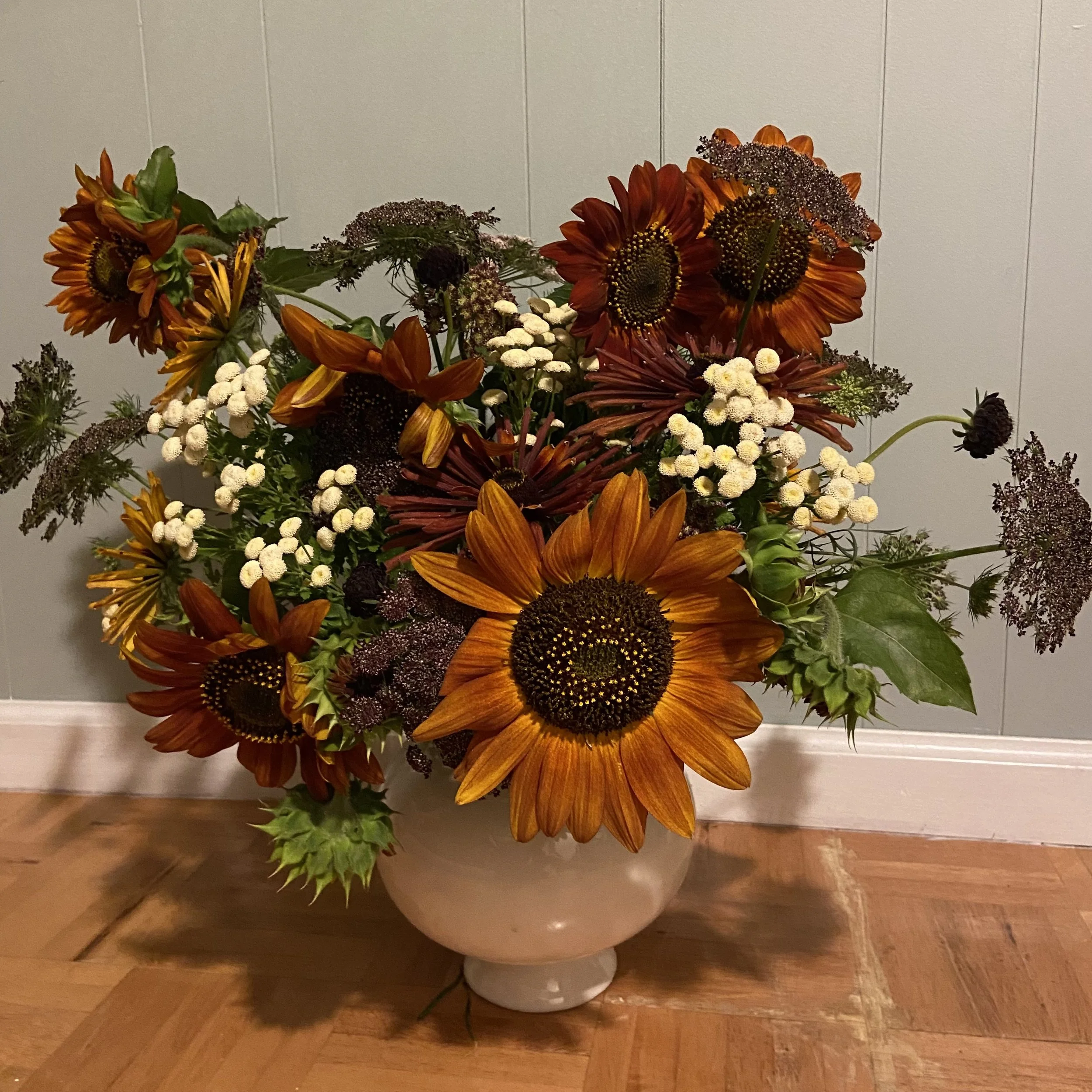
Start With a Focal Flower (Your Showstopper)
Every bouquet needs a star—the bloom your eye goes to first. These are typically larger, more dramatic flowers that anchor the arrangement.
Great garden focal flowers include:
Zinnias – prolific, cheerful, and available in endless colors
Dahlias – bold, romantic, and incredibly special (worth the extra care in staking)
Sunflowers (pictured)– cheerful and dramatic, especially pollenless varieties which are best for cutting (no messy pollen on your table or your guests!)
You don’t need many varieties here. One or two reliable focal flowers can carry your bouquets all season long.
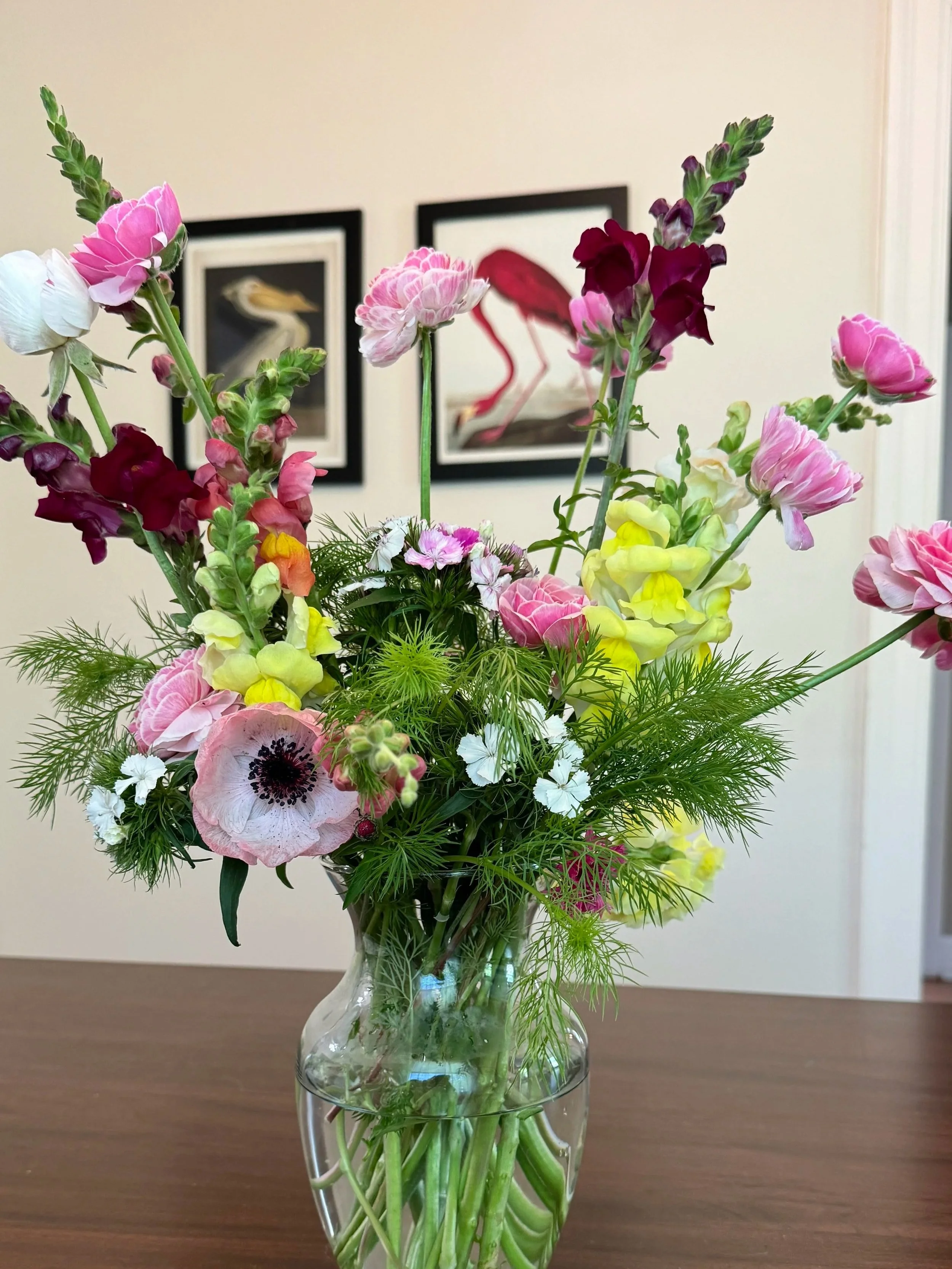
Add Something Spiky for Shape and Drama
Spiky flowers add height and contrast, keeping arrangements from feeling flat or round.
Some favorites:
Snapdragons (pictured)– tall and elegant with long-lasting blooms that add vertical drama
Larkspur – airy and romantic, especially lovely in spring bouquets
Salvia – sturdy spikes that add rich color and attract pollinators
Celosia (plume or spike types) – bold texture and vibrant color that holds up well in summer heat
These give your bouquets a sense of upward movement and structure.
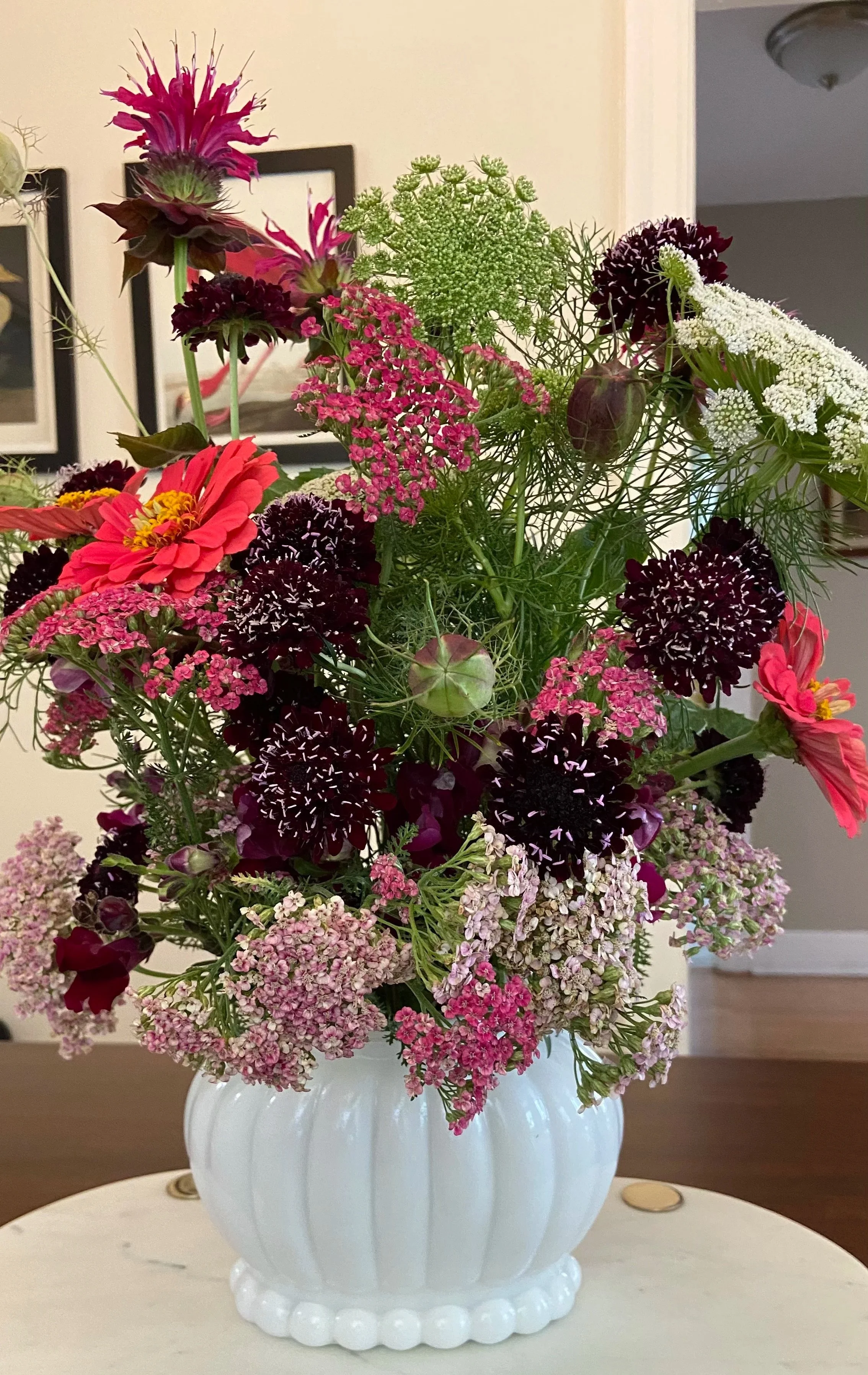
Fillers: The Unsung Heroes of Bouquets
Fillers do exactly what they sound like: they bulk things up, soften edges, and help connect all the pieces.
Easy, garden-friendly fillers:
Yarrow (pictured)– sturdy clusters that add soft color and blend beautifully between bold blooms
Feverfew – tiny daisy-like flowers that lighten arrangements and make everything feel cheerful
Ammi (Queen Anne’s lace type flowers, pictured) – airy and delicate, perfect for adding movement and a romantic feel
Statice – long-lasting filler with papery texture that also dries beautifully
Bachelor Buttons – charming cottage-style blooms that tuck easily between larger flowers and add a pop of blue, pink, or white
These plants are workhorses. They produce a lot of stems and many of those stems hold clusters of florets.
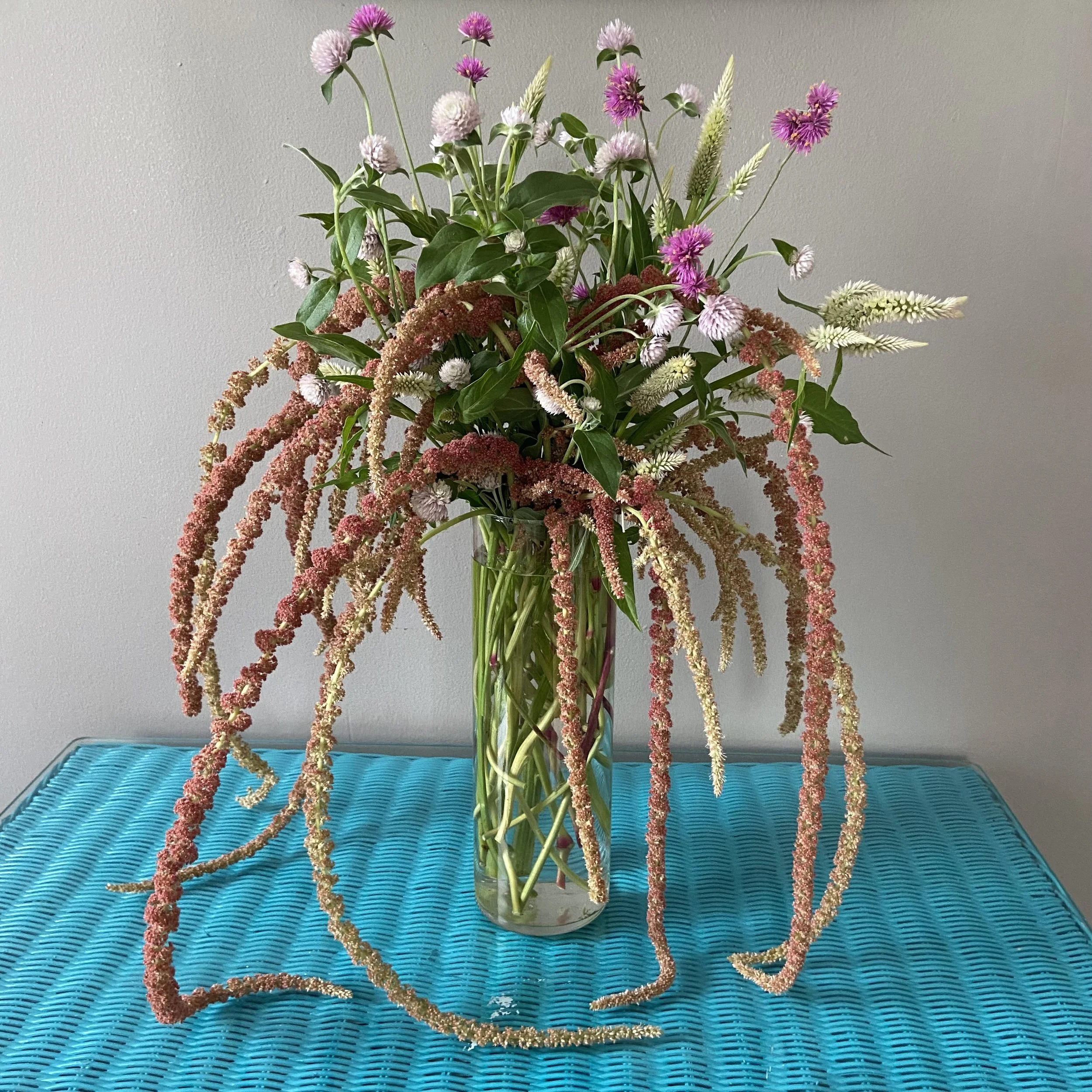
Don’t Forget the Whimsy
This is where bouquets get playful. Whimsical flowers bounce, wiggle, and move with the air, making arrangements feel alive instead of stiff.
Try:
Pincushion flower (Scabiosa) – delicate, airy blooms that bob above the stems and add softness and bounce
Gomphrena (pictured)– cheerful, clover-like globes that thrive in heat and last beautifully in both fresh and dried bouquets
Amaranth (pictured)– dramatic, trailing tassels or upright plumes that add texture and a slightly wild, romantic movement to bouquets
These are often the flowers people comment on most—“What is that?”
Foliage + Scent = The Secret Ingredient
It’s easy to overlook, but a lush green backdrop makes your flowers’ color pop. Texture and fragrance matter, too. And you know that impulse to stick your nose into a bouquet when someone hands it to you? Reward it with stems that smell amazing.
Lemon basil (pictured)– bright citrus scent that instantly freshens a bouquet and the whole room
Cinnamon basil – warm, spicy fragrance that pairs beautifully with rich summer tones
Mint – abundant and easy to tuck in for softness, with a cooling scent that feels luxurious
Rosemary – sturdy, evergreen sprigs that add structure and a subtle herbal aroma
Dill (pictured)– feathery foliage and airy umbels that add softness, movement, and a subtle fresh scent to summer bouquets
If you let these herbs bloom, they can also serve as subtle fillers or spikes.
Narrow it Down: Choose a Color Palette
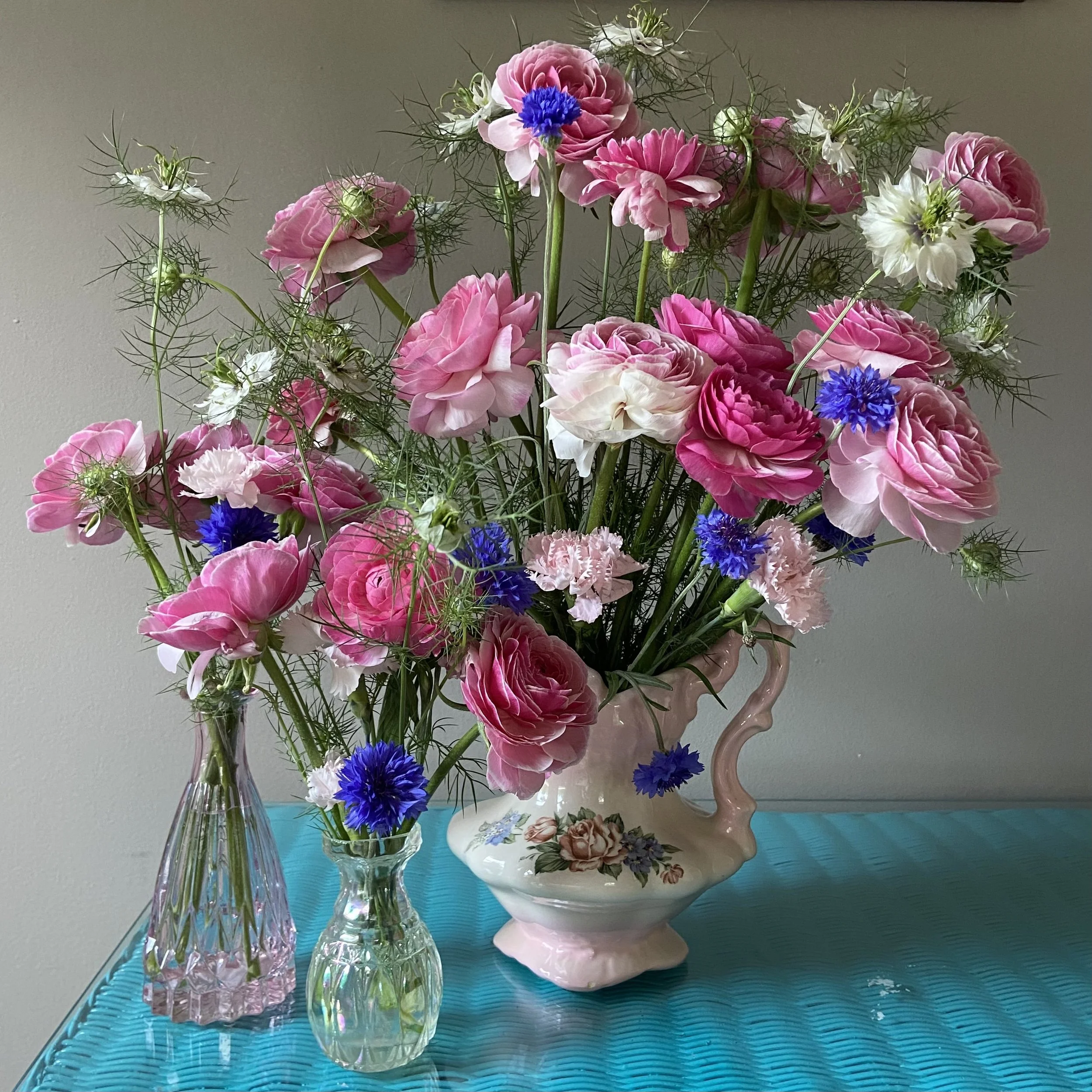
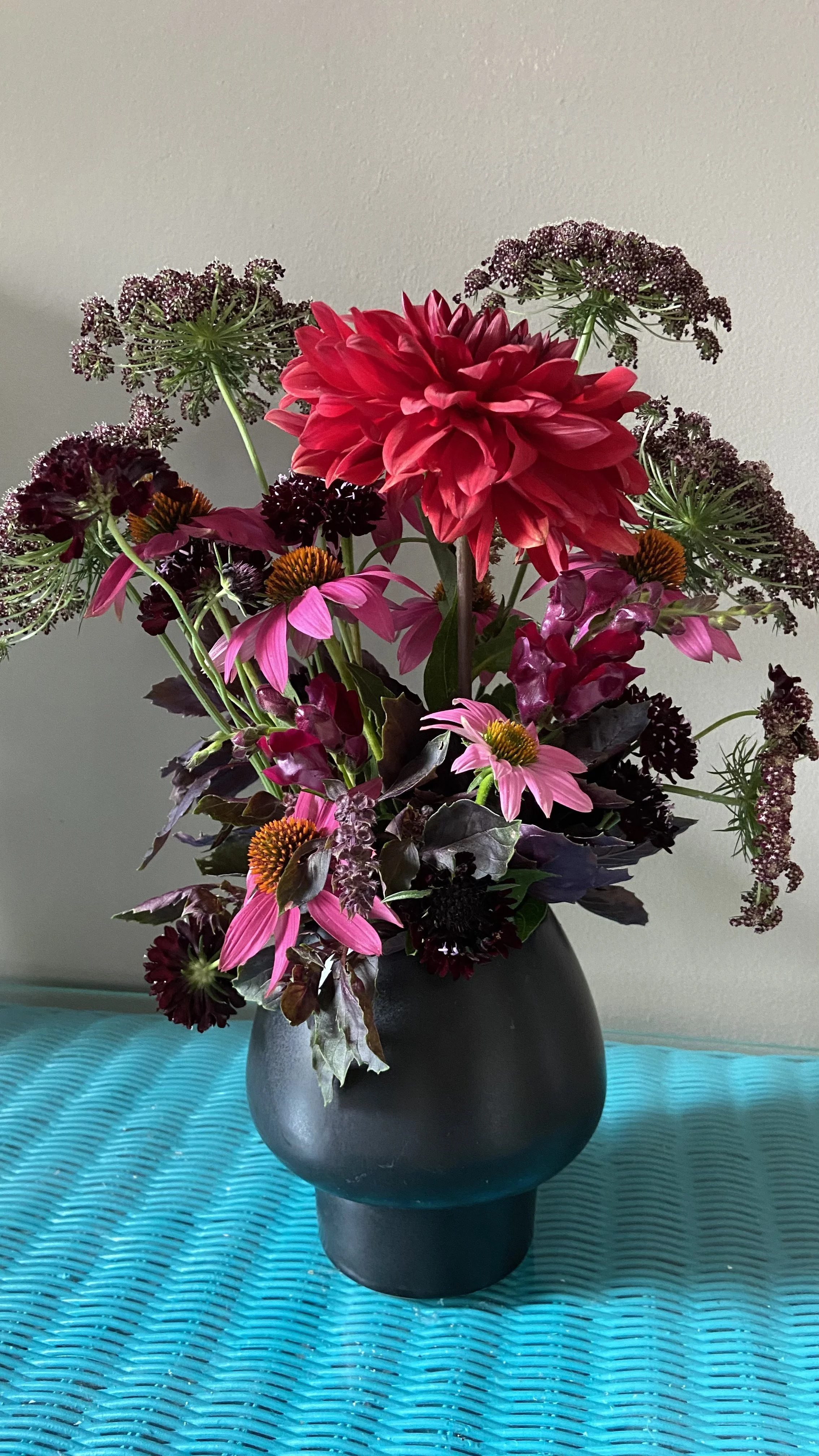
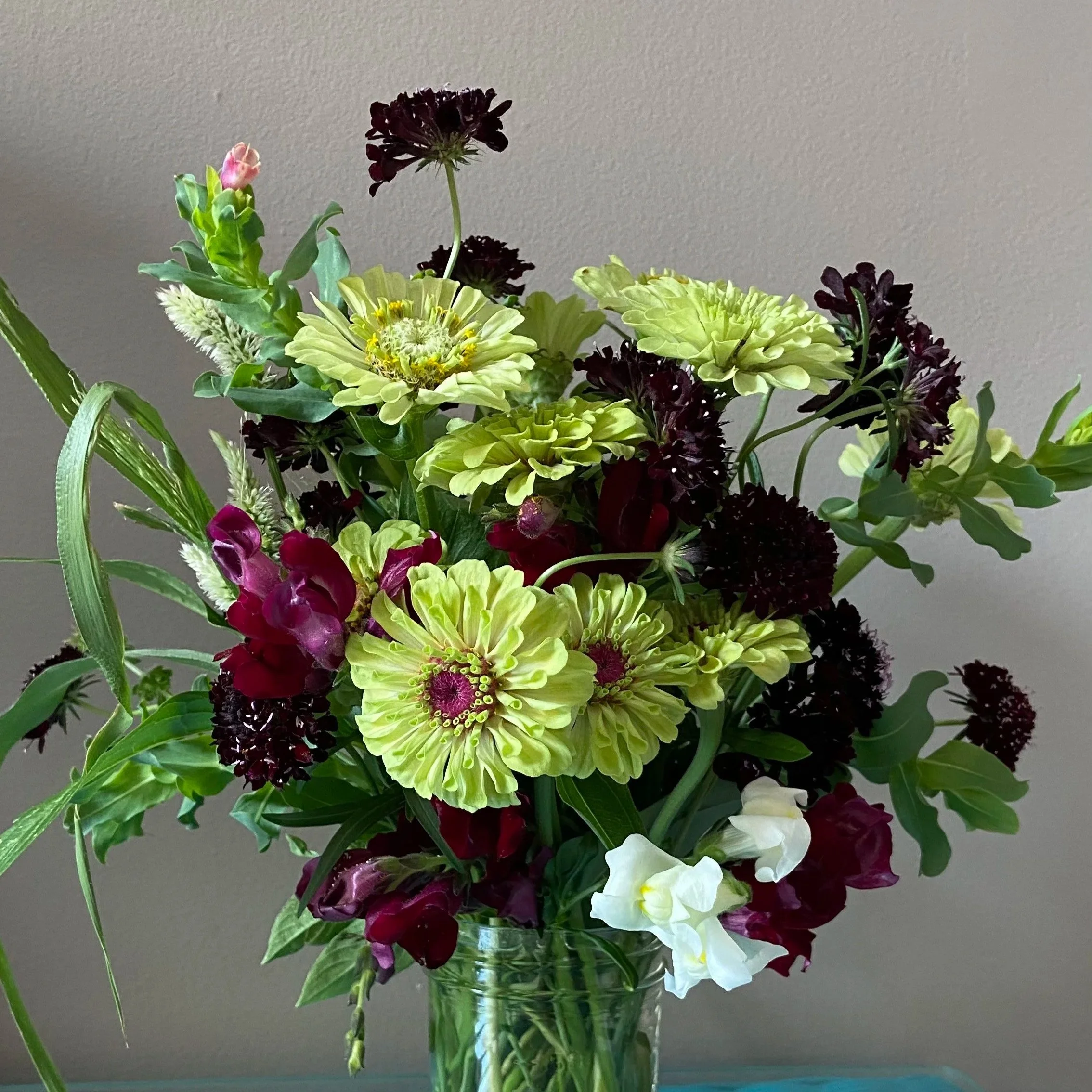
Instead of planting every color you love, try choosing a loose palette—maybe soft pastels, hot summer brights, or warm sunset tones. This makes it almost impossible to make a “bad” bouquet, because everything you cut naturally works together.
It also means that when you need flowers right now—for a birthday, a dinner party, or a random Tuesday—you can grab whatever’s blooming and feel confident it will look intentional. And I’ll be honest, my first impulse is to add everything in. Every color. Every stem. It usually ends up looking like clown pants. But when I pull a few colors out and stick to just two or three shades, I’m usually much more satisfied with my bouquets. I grow most all of the colors, but divide them up when I'm arranging.
Want to dive deeper into how color harmony works in floral arranging? Check out this video from designer Nadine Brown.
Singles & Season Stretchers
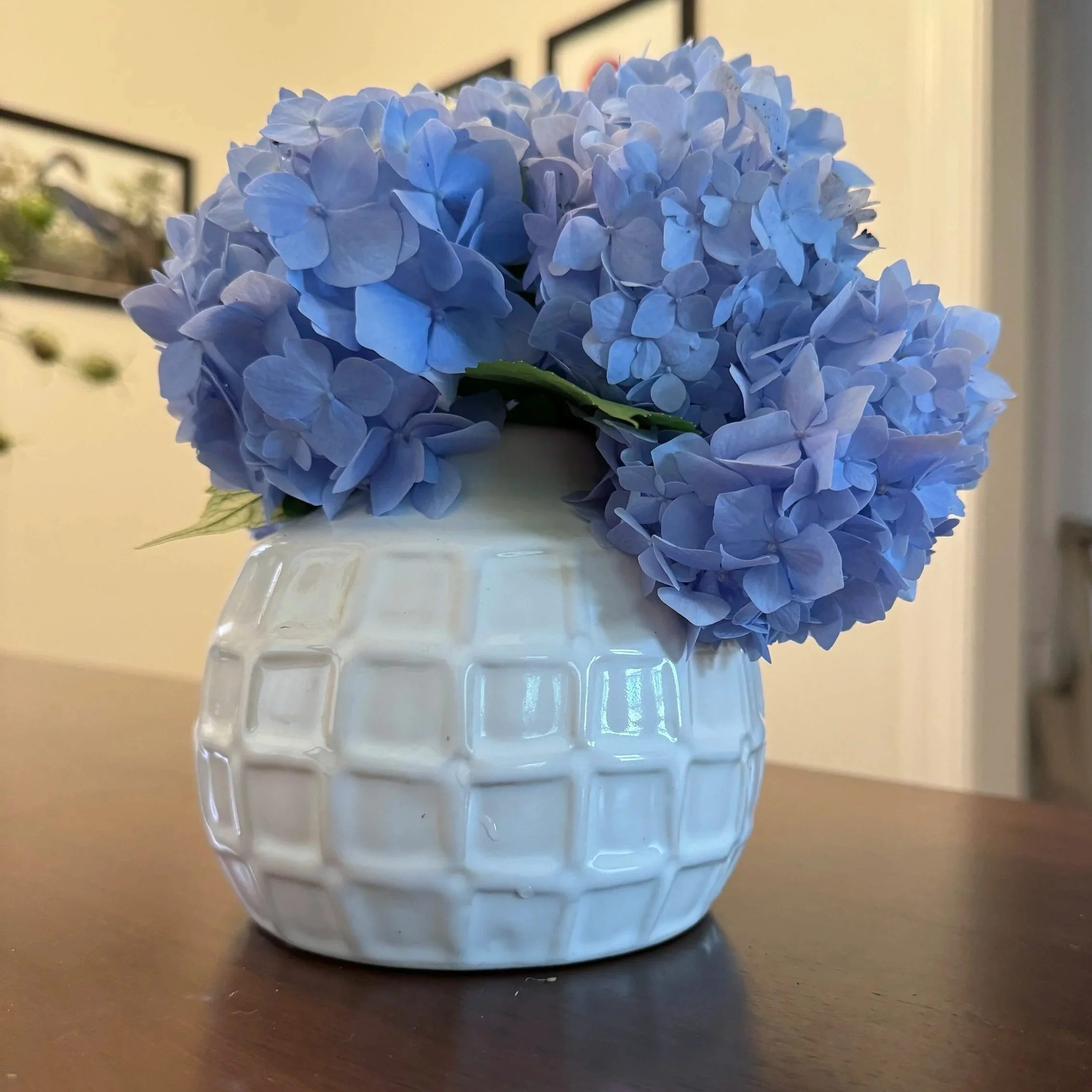
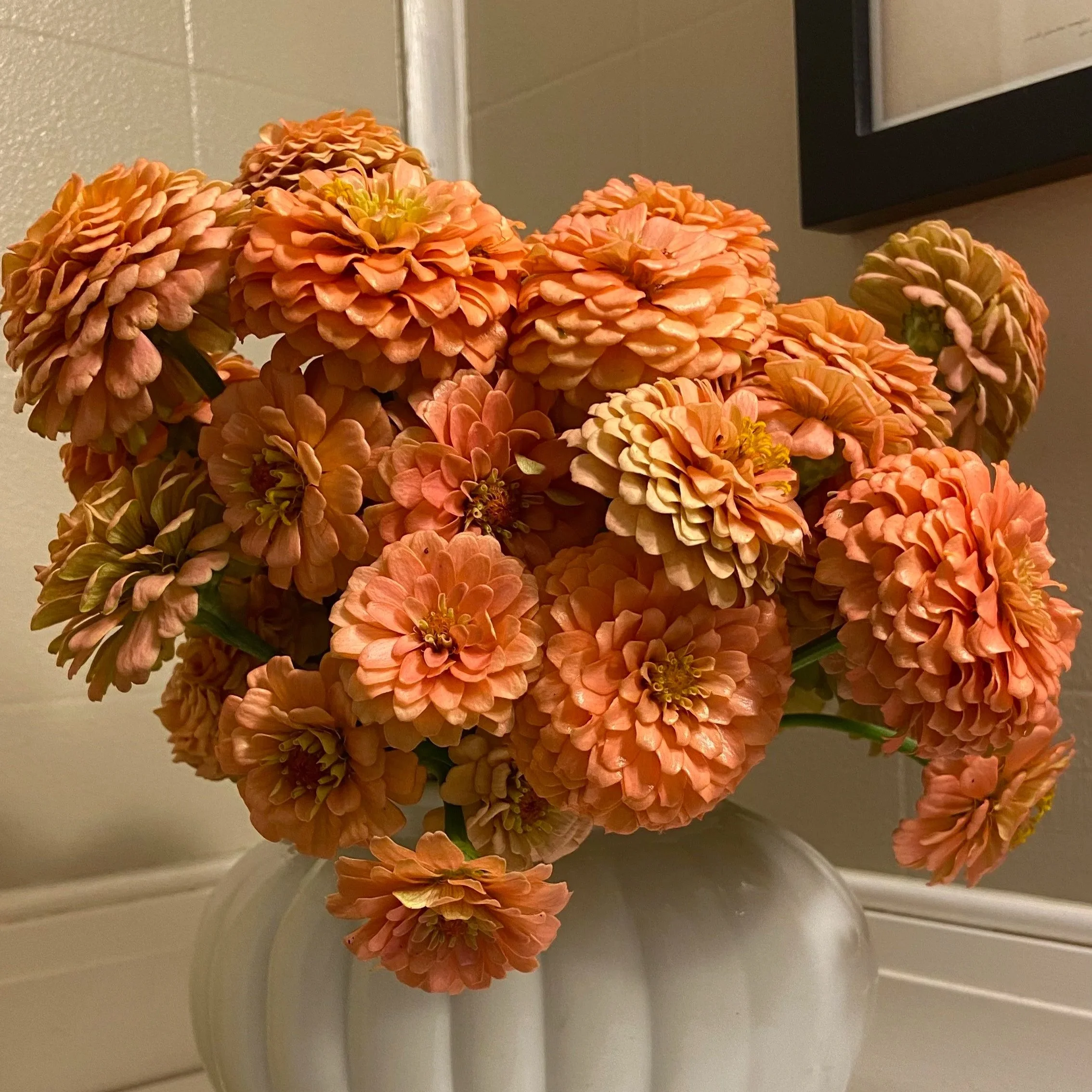
While I’m all about mixing shapes and textures, there is something stunning about a bouquet made from just one flower (hello red roses!). A mason jar packed tight with zinnias in every shade of coral and pink. An armful of hydrangeas gathered from one shrub. A cluster of sweet peas on a bathroom shelf. Don’t underestimate the power of a single variety arranged en masse—it’s quick, easy, and joyful.
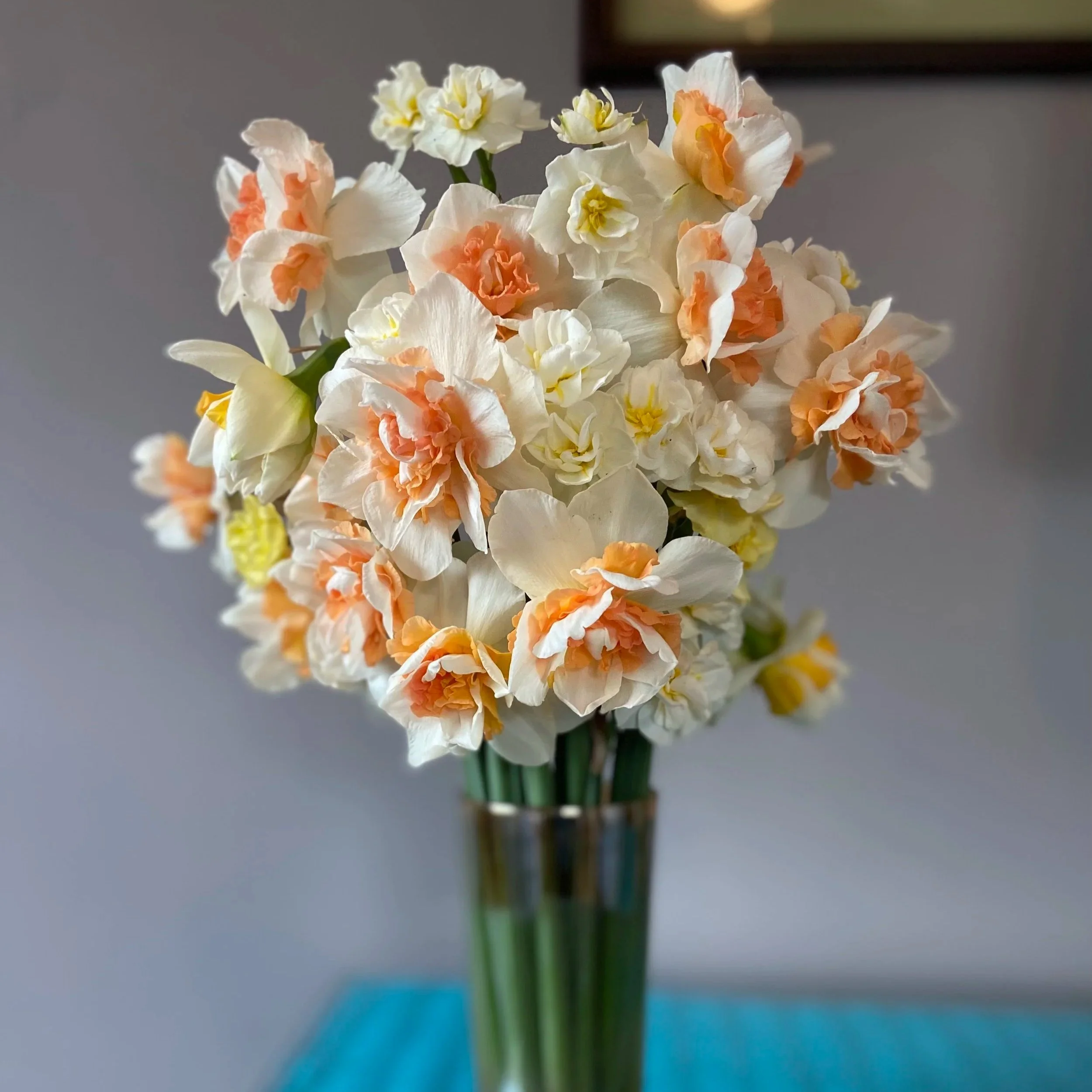
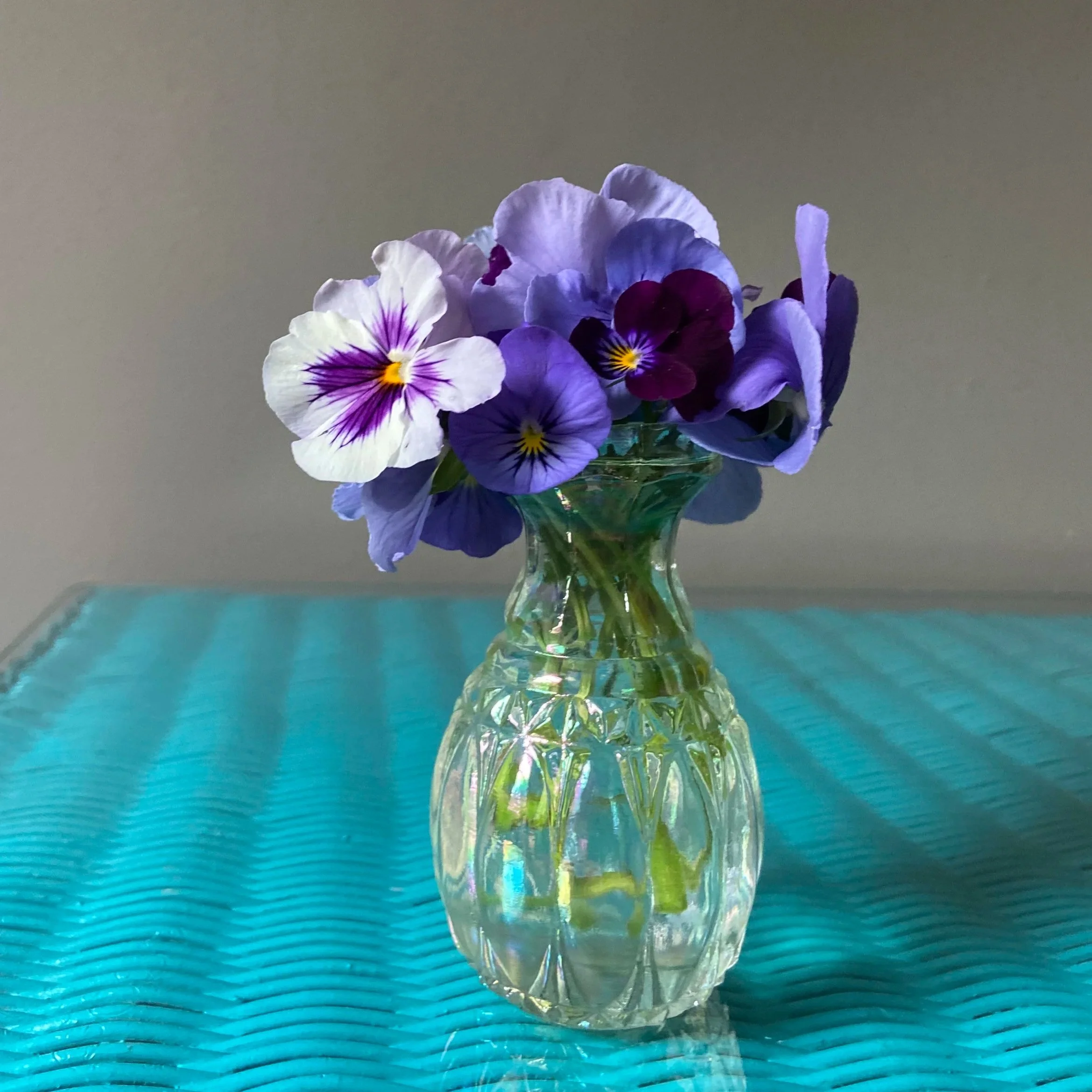
And if you want to extend the cutting season even further, let’s go beyond summer. Plant early spring bloomers like daffodils or tulips for the first bouquets of the year. Add flowering shrubs like hydrangeas which also look great when dried in the fall, and even snip from your arborvitaes and juniper for winter greenery. When you layer spring bulbs, summer annuals, and a few perennial staples, your “bouquet season” stretches far longer than you might expect.
We don’t grow long‑stem roses in our gardens—but we can still take inspiration from the florist shop. Just like your veggie garden, when you grow cut flowers, you are growing ingredients that work together to create a feast for the eyes. And just like the veggies, grow what thrives where you live and let your plant choices reflect your taste. When you design with intention—choosing a flower to play its role in structure, movement, or scent, within a thoughtful palette—you give yourself the freedom to step outside, clip a handful of stems, and create something beautiful from whatever is blooming.
To me, that feels like a pretty perfect gift, Valentine’s or any day.