How to Leave Your Garden for a Week (Without Coming Home to a Mess)

Every August, we hear some version of the same story.
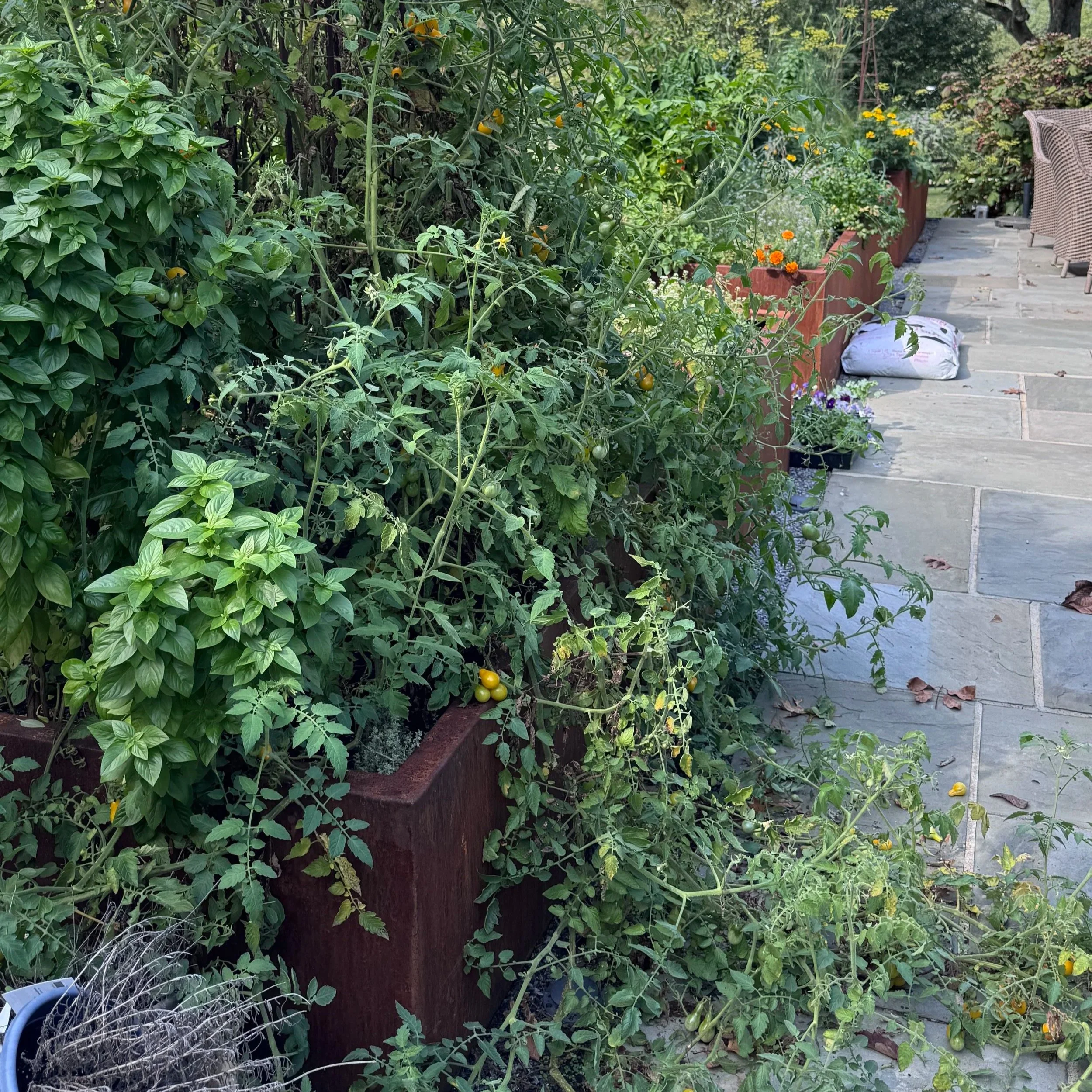
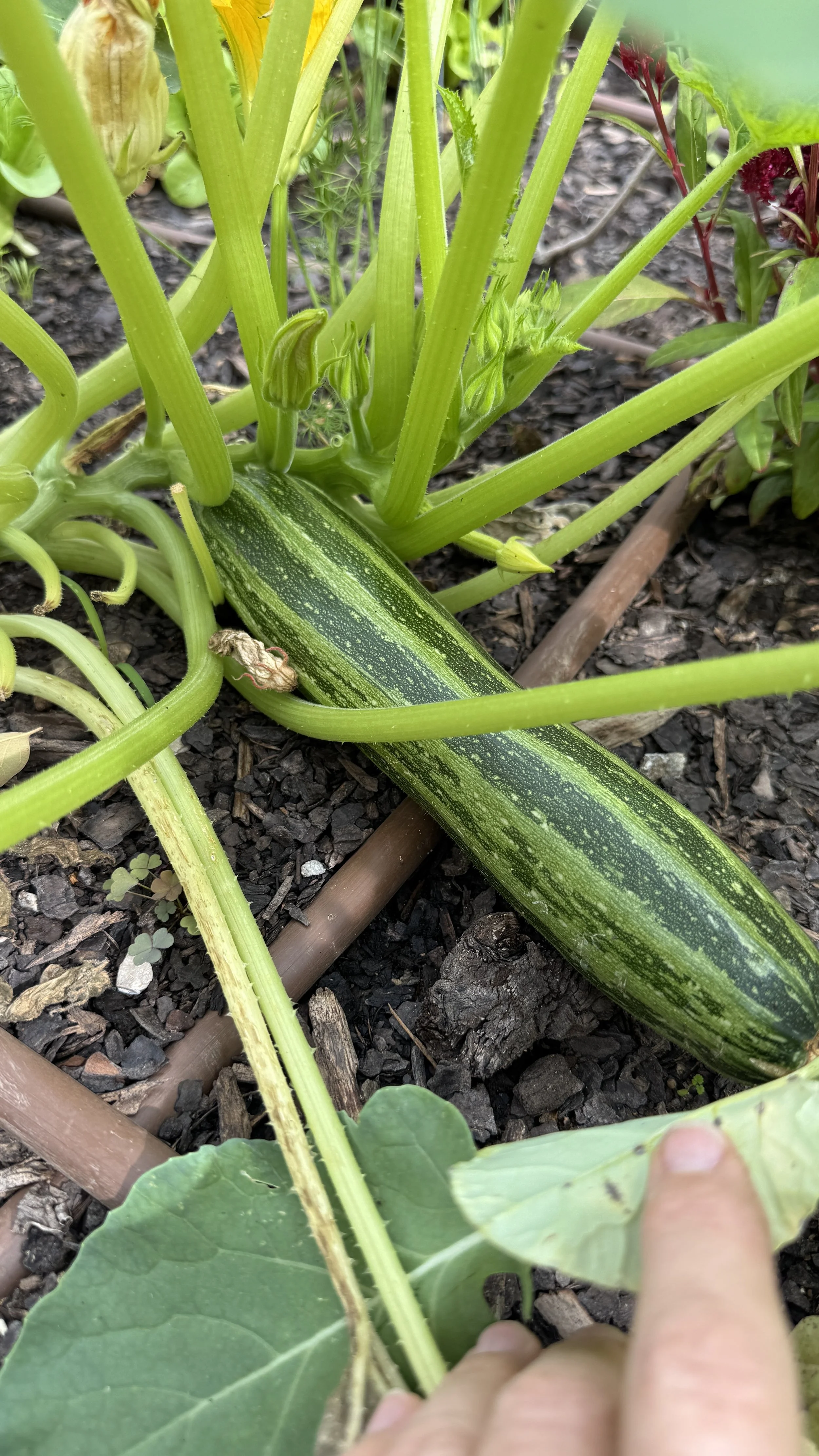
We show up to a client's garden after they've been away for a week or two, and before we even get through the gate they say it: "My neighbor was supposed to look after things, but I don't think they did much." There are tomatoes on the ground, soft and split. A zucchini the size of a small child hiding under a leaf. Basil gone completely to flower. The garden didn't suffer because nobody showed up. It suffered because the person who showed up was afraid to touch anything.
We get it. Walking into someone else’s garden can be overwhelming and intimidating. Garden sitters aren’t willfully neglecting their botanical charges. They don’t do much because either they don’t see what needs to be done, or they're worried they'll hurt something. So they water (*maybe*), and they leave. And the garden, which needed someone to actually harvest it, turns into a jungle.
In a summer kitchen garden, doing nothing is actually doing damage. Unharvested tomatoes rot on the vine and invite disease. Overgrown zucchini pulls energy away from new fruit. Basil that flowers stops producing leaves. Your garden sitter doesn't need to be a gardener, but they do need specific instructions and permission to take action.
So let’s try something different this summer. Here’s a guide to setting your garden (and your garden sitter) up for success before you go.
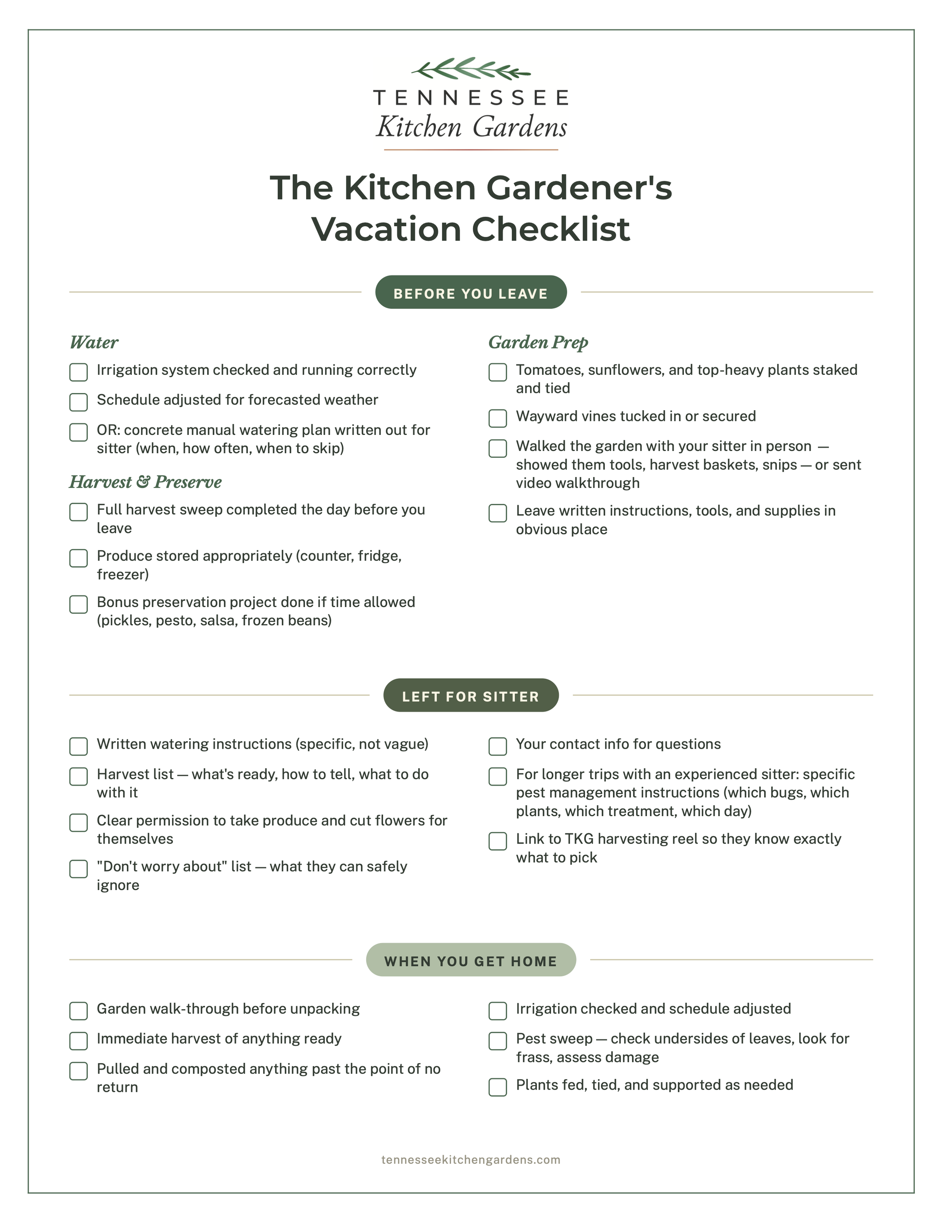
Short on time? Skip to the checklist at the bottom — it mirrors the full article and gives you everything you need to work through before you leave.
Before You Leave
A little preparation before you walk out the door makes an enormous difference in what you come home to. Here's where to focus your pre-vacation garden energy.
Get your water situation sorted first
This is the most important thing on this list, and it needs to be specific. If you have an irrigation system, check that it's running properly and that the schedule actually matches the weather forecast for while you're away. A timer set for daily watering made sense during a dry spell — it doesn't make sense if thunderstorms are rolling through all week.
If you're relying on a garden sitter to water manually, give them a concrete plan rather than a vague directive. "Water when it looks dry" is not instructions. "Water thoroughly every other morning before 9am, skip it if it rained that day" is instructions. The more specific you are, the more likely they'll actually follow through.
Harvest everything you can before you go
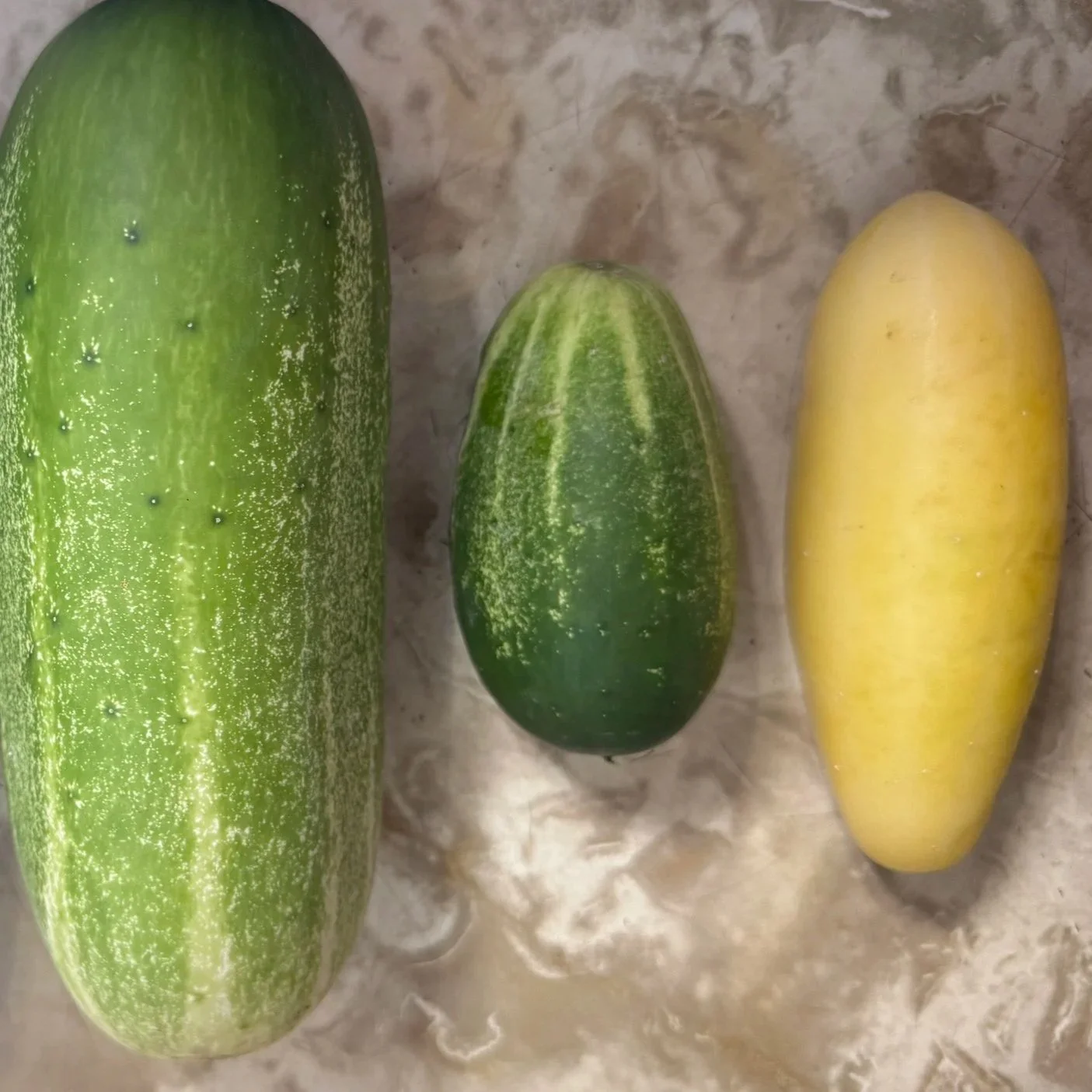
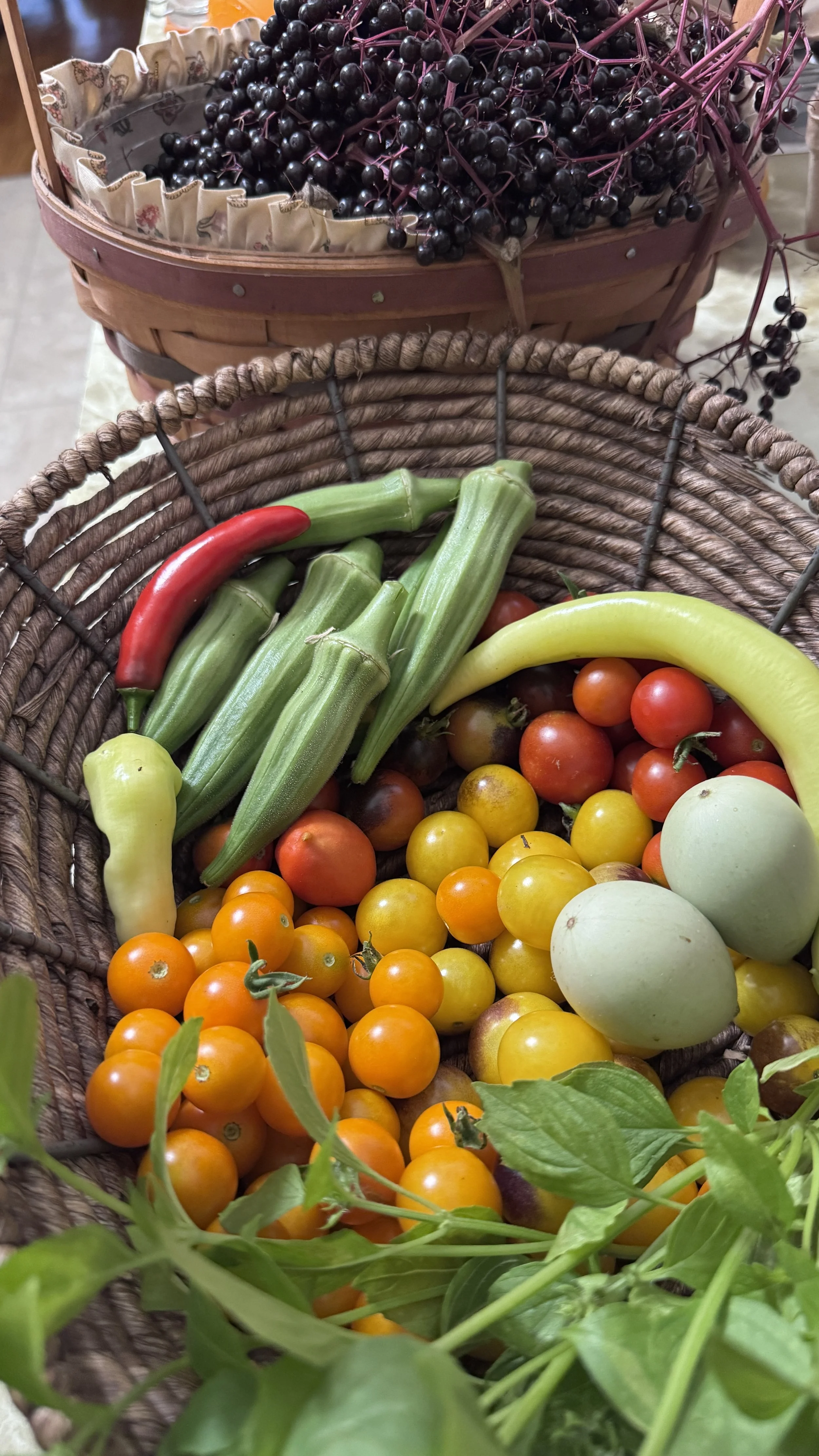
Do a thorough sweep of the garden the day before you leave. Pick every cucumber that's close to ready. Pull the tomatoes that are almost there — they'll ripen fine on your counter. Cut the basil, grab the beans. Then decide what to do with the haul.
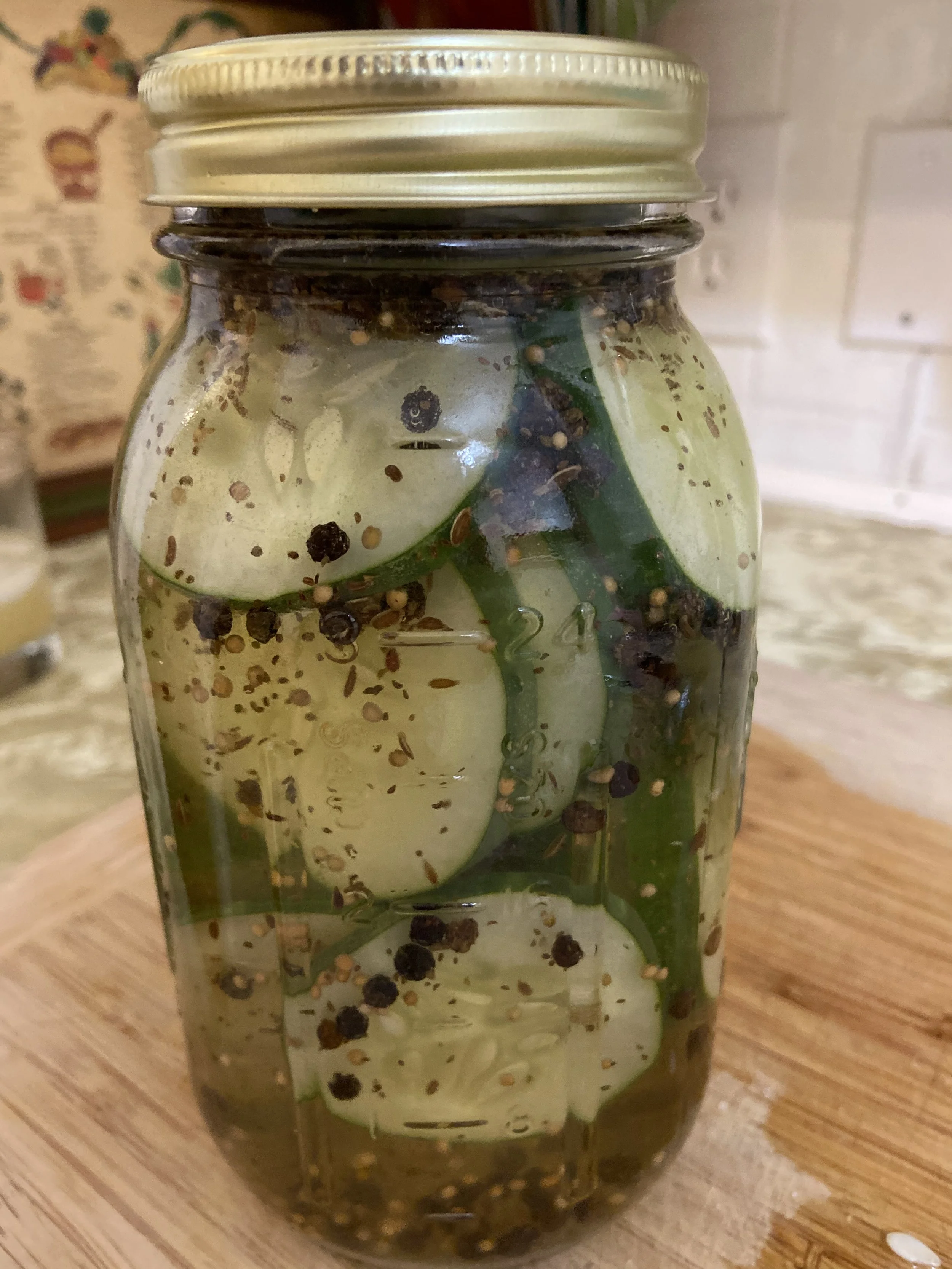
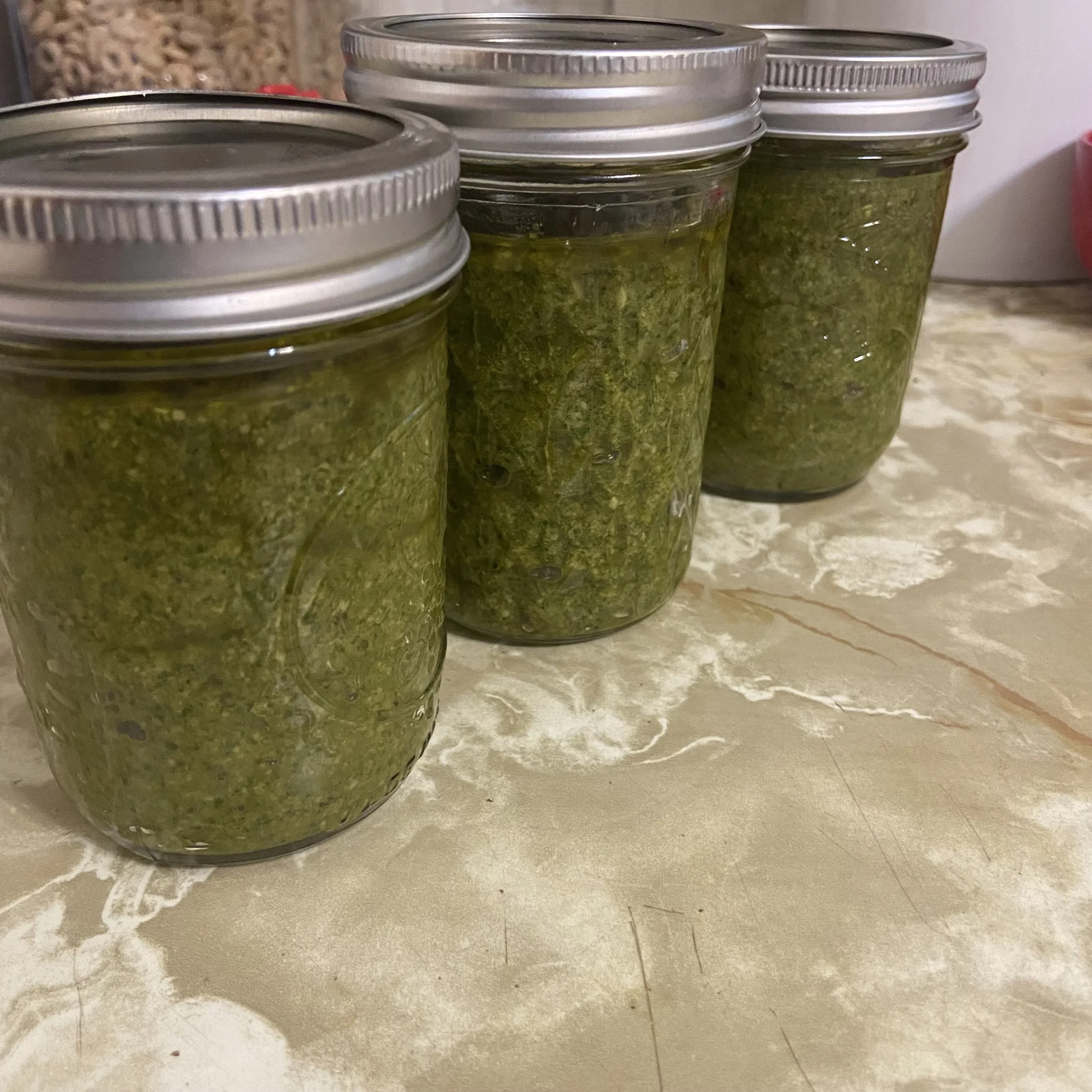
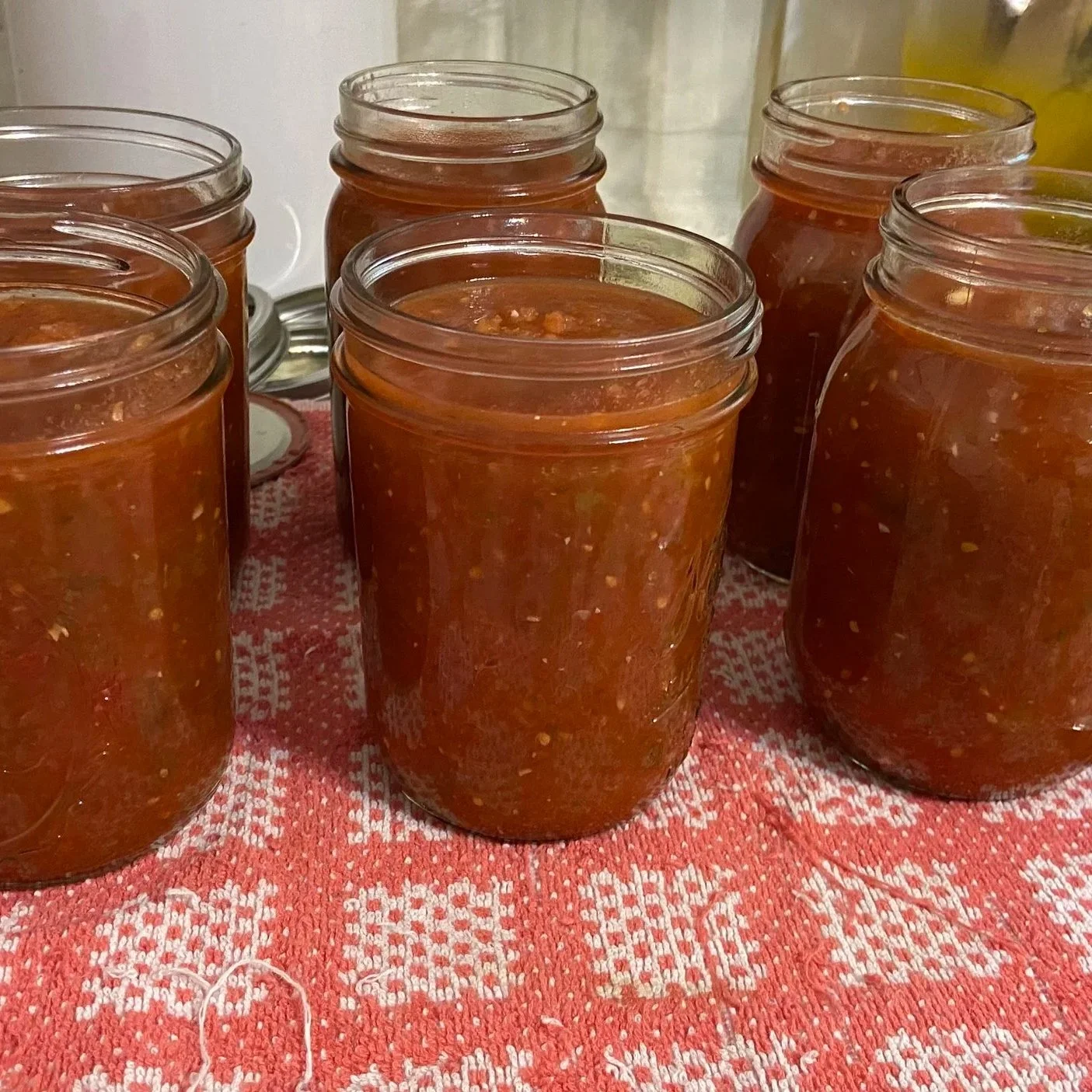
If you have time, this is a great moment for a quick preservation project — a jar of refrigerator pickles takes twenty minutes and saves a week's worth of cucumbers from rotting on the vine. A batch of freezer pesto, a simple salsa, a few bags of blanched green beans in the freezer. We know, we know — you're also trying to pack, find the dog's vaccination records, and remember where you put your passport. Do what you can. Even a partial harvest before you leave makes a big difference. You can leave the bounty for the house- or pet-sitter as a thank-you gift.
Stake, tie, and support before a storm takes it down
Summer storms in Middle Tennessee are not subtle. Before you leave, walk your garden and look for anything that's top-heavy, leaning, or one big gust away from disaster. Tie up tomato branches that have grown out-of-bounds. Stake sunflowers that are starting to nod. Tuck in any wayward melon or squash vines that have wandered into the pathway. A plant that's well-supported going into a storm has a fighting chance. One that isn't may not be there when you get back.
Leave written instructions — and make them a permission slip
Your garden sitter is not going to hurt anything by harvesting. In fact, not harvesting is what hurts the garden. But they don't know that — which is why you need to tell them explicitly, in writing, before you go.
Leave a simple note or checklist that covers: what's ready to pick and how to tell, what they should take home for themselves (yes, really — this is great motivation), and what to do with anything they leave at your house (counter for tomatoes, fridge for cucumbers and beans, vase of water for cut flowers). A photo of a ripe tomato next to an unripe one is worth a thousand words. The more you demystify the process, the more likely they are to actually engage with it.
How much to ask depends on how long you're gone
A one-week trip is straightforward: watering and harvesting are the two jobs. That's it. A reasonably attentive neighbor or friend can handle this with a good set of written instructions and a little encouragement.
A two-week trip is a different ask. Two weeks in a summer garden means pest pressure building, tomatoes needing pruning, plants needing fertilizer, vines needing to be tied. This is more than you can reasonably ask a friend or neighbor to manage unless they're an experienced gardener themselves — or someone you're paying or trading time with. Be honest with yourself about what you're asking and who you're asking it of.
Longer than two weeks? Bring in the professionals. This is exactly what our summer tending visits are designed for. We'll keep your garden harvested, supported, and healthy while you're away — so you come home to abundance instead of overwhelm.
What to Tell Your Garden Sitter
Finding someone to look after your garden is one thing. Setting them up to actually do it is another. The gap between those two things is usually just information and reassurance. Take a little time to provide those and you’ll both have a more positive experience.
Have the conversation before you hand over the key
Don't just leave a note and hope for the best. Take ten minutes to walk your garden sitter through the space in person before you leave, if at all possible. Show them where the hose is, how the irrigation timer works, and where you keep the tools — harvest basket, snips, anything they'll need. Point to a ripe tomato and an unripe one side by side. Show them what a cucumber looks like when it's ready versus when it's been on the vine too long. This kind of hands-on orientation takes almost no time and makes your written instructions make a lot more sense. If you don’t have a chance to show them in person, send a short video pointing out what needs to be done.
What your written instructions should include
Keep it simple and specific. A one-page checklist is plenty. Cover:
Watering: when, how much, and under what conditions to skip it
What to harvest: a short list of what's likely to be ready, with a brief description of how to tell — size, color, feel
What to do with the harvest: what goes on the counter, what goes in the fridge, what they should take home for themselves (and yes, encourage this — it's the best motivator there is)
What NOT to worry about: give them explicit permission to ignore the things that don't need attention. A few yellowing leaves, some pest damage, a weed or two — none of that is their job. Narrowing their focus makes the whole task feel manageable instead of overwhelming.
For longer trips with an experienced sitter: get specific about pest management. Not "watch for bugs" — but "pick Japanese beetles off the roses every morning and drop them in soapy water" or "spray the kale with BT on Wednesday." The more concrete the instruction, the more likely it actually happens.
Note: Save this info digitally as a Note or Document so you can simply make quick updates when you leave town again.
Make it feel like a gift, not a chore
Here's the persepctive your garden sitter probably needs: they're not housesitting your vegetables. They're getting a week of free produce, fresh flowers, and a reason to slow down outside. Let them know that eating the tomatoes, cutting a bouquet, snacking on cucumbers straight off the vine — that's not helping themselves to something that isn't theirs. That's exactly what you're asking them to do. Every zucchini they take home is one less that ends up the size of a softball bat on your return. Every bouquet they cut keeps the flowers coming. They are helping you by enjoying it.
And hammer this point home. Most people won't pick a single thing unless you explicitly tell them it's welcome.
When You Get Home
Before you unpack, go check on your garden.
You know you’ll want to anyway. Do a quick walk-through while the light is good and your eyes are fresh. Take stock of what happened while you were away without judgment. Some things thrived. Some things didn't. That's summer gardening.
Here's what to do in the first 48 hours back:
Harvest immediately. Whatever is ready, pick it now. Before you hit the grocery to re-stock your fridge do some meal planning around your harvest. Set a bouquet of flowers on the table.
Pull anything that's past the point of no return. A rotted tomato, a split zucchini, a bolted lettuce — remove it, toss it in the compost, and make space for what's still producing.
Check your irrigation. Did it run correctly while you were gone? Adjust the schedule if needed based on what you're seeing in the soil.
Do a pest sweep. A week or two of less attentive eyes means pests may have gotten a foothold. Check undersides of leaves, look for frass, assess the damage and make a plan to handle them.
Give your plants a little love. Tie up anything that flopped, prune what needs it, and get back on schedule with fertilizing and soil amendments.
Then go make yourself a big harvest bowl and call it a homecoming feast.